Sony A6700 for Wildlife Photography
The Sony A6700 is a compact APS-C body with the same AI autofocus chip as the A7R V, a 1.5× crop factor that turns the 200-600mm into a 300-900mm equivalent, and exceptional video AF. It is the camera I should have started with — light enough to carry anywhere, capable enough for everything except flagship-class action and harsh-weather work.
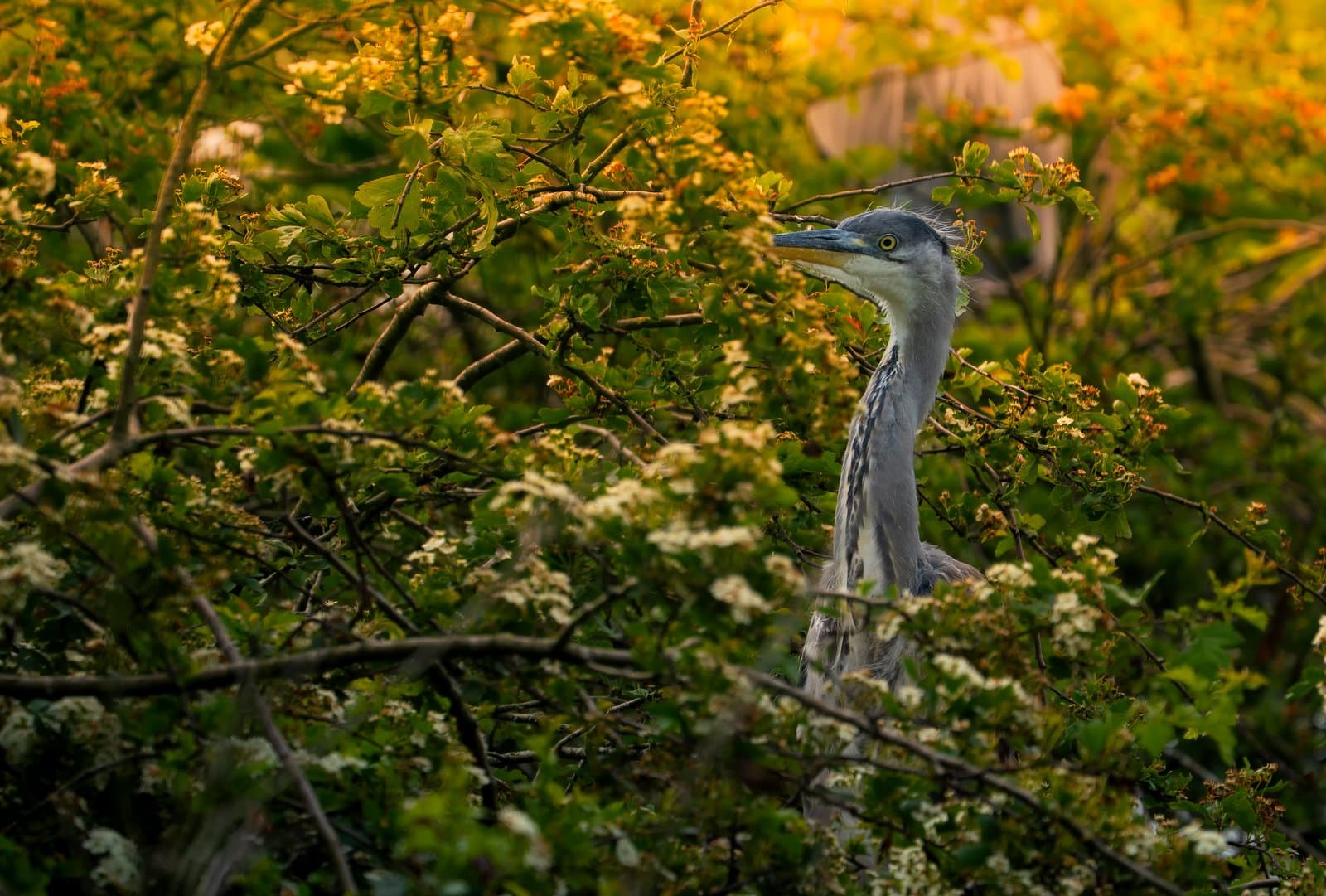
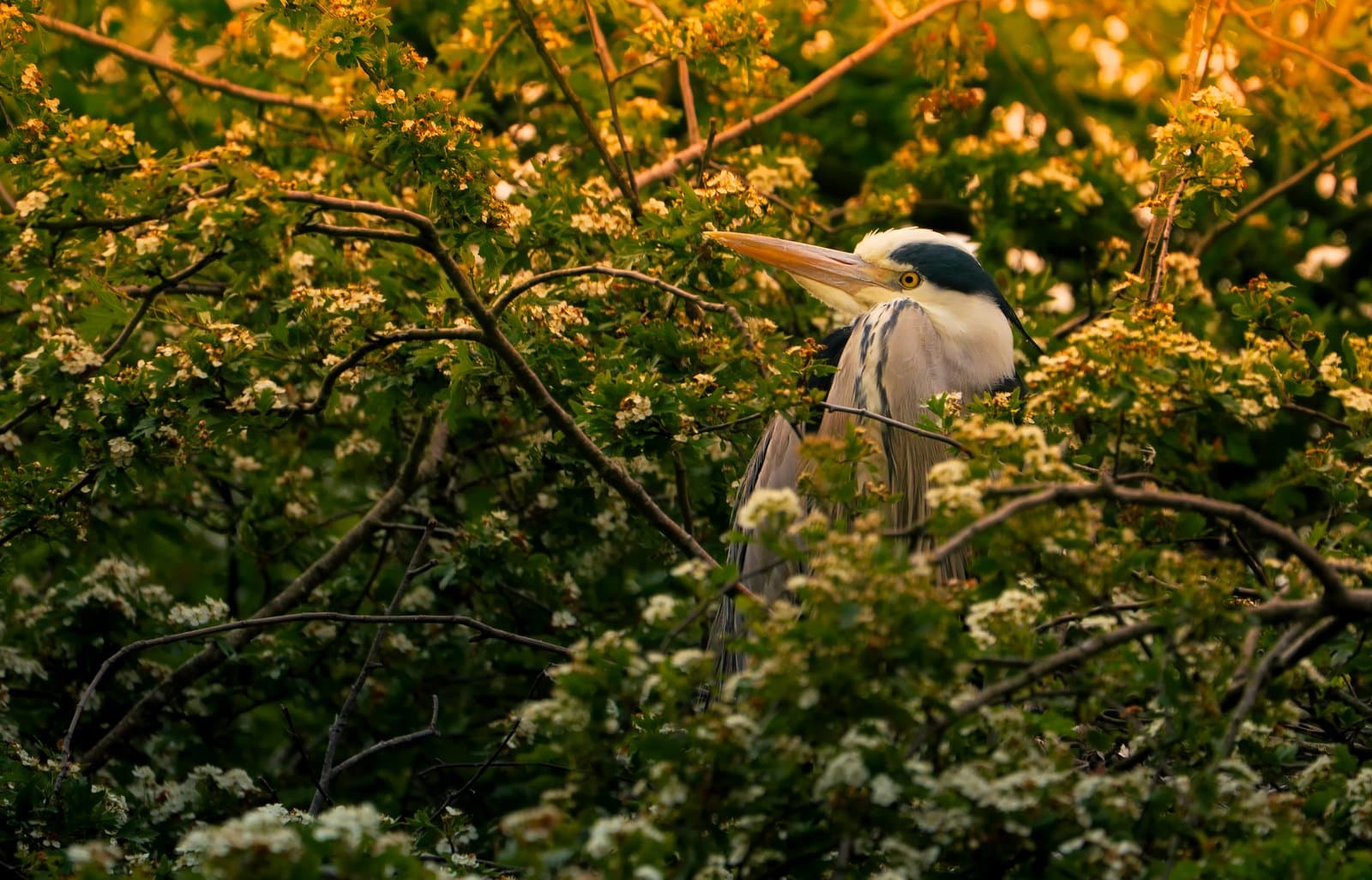
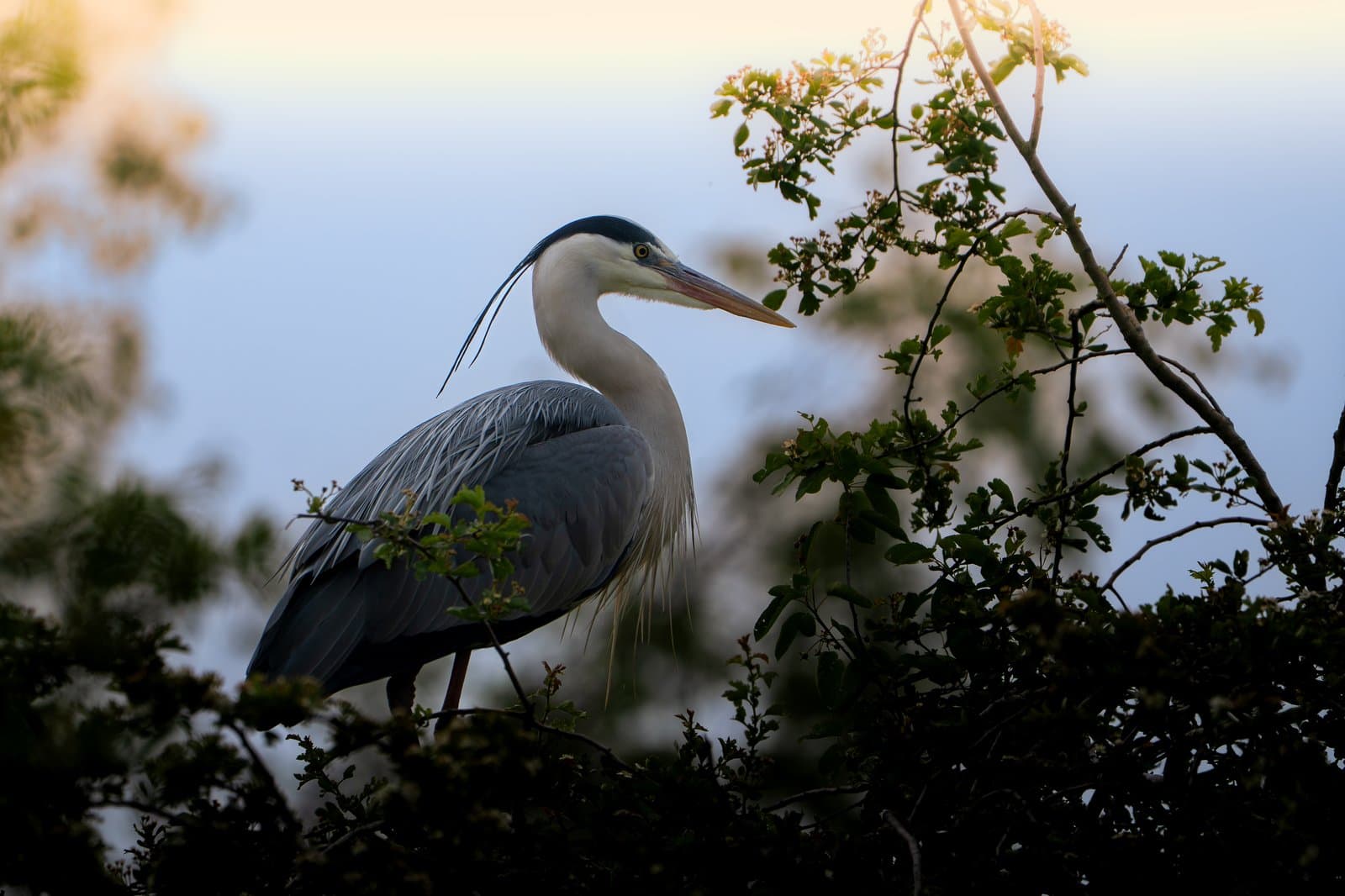
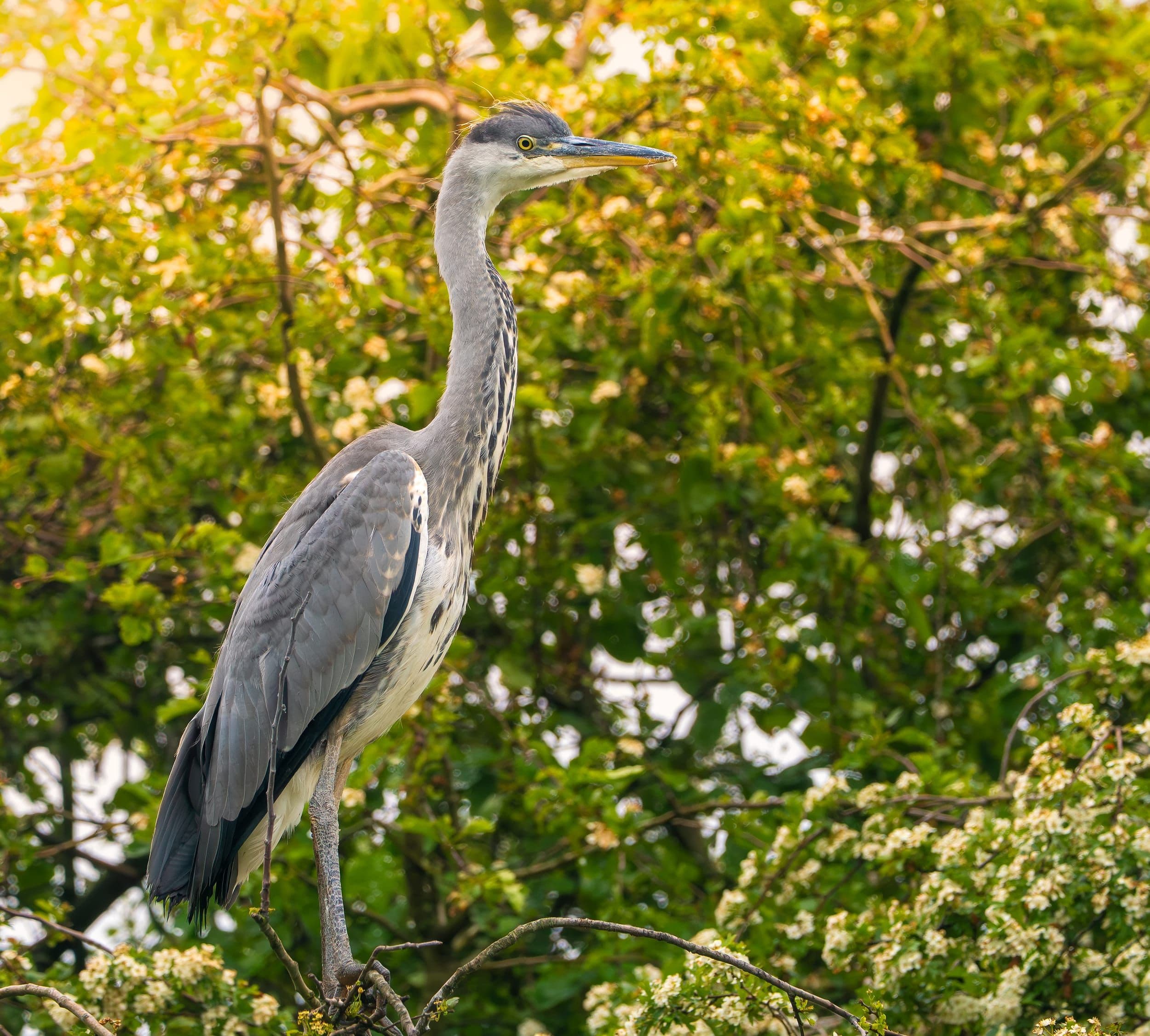
Grey heron at golden hour, framed by hawthorn blossom — Pennington Flash. Sony A6700 + FE 200-600mm at 600mm (900mm equivalent on APS-C)
The Sony A6700 is the camera I should have started with. After three years and four flagship bodies, it's still the one I reach for on a summer walk — and increasingly the one I reach for when I want to film wildlife rather than photograph it. This is an honest review of what an APS-C body can and can't do alongside full-frame flagships, written from someone who genuinely uses both.
My Sony A6700 Wildlife Kit
Body: the Sony A6700, 493g with battery and card. It takes the same NP-FZ100 battery as the rest of the modern Sony line-up, and I never need to swap batteries during a session.
Long lens: the Sony FE 200-600mm f/5.6-6.3 G OSS, which frames like a 300-900mm on this body. Every sample photograph in this review was taken with it.
Light lens: the Sony 70-350mm, which frames like a 105-525mm. It is the lens for long walks, and the lighter, cheaper way in if the budget is tighter.
Support: in a hide the lens rests on the ledge, a knee or a beanbag. I have a monopod I should use more often.
Settings: bird-eye autofocus, which locked on 95% of the time even through reeds, and ISO up to 6400 without hesitation, because a sharp, frozen subject matters more than a clean low-ISO file. Around ten frames per second covers herons, swans and gulls; it will not keep up with a kingfisher dive.
Weather: the A6700 is dust and moisture resistant, not weather-sealed, so on wet days I take an OM-1 instead.
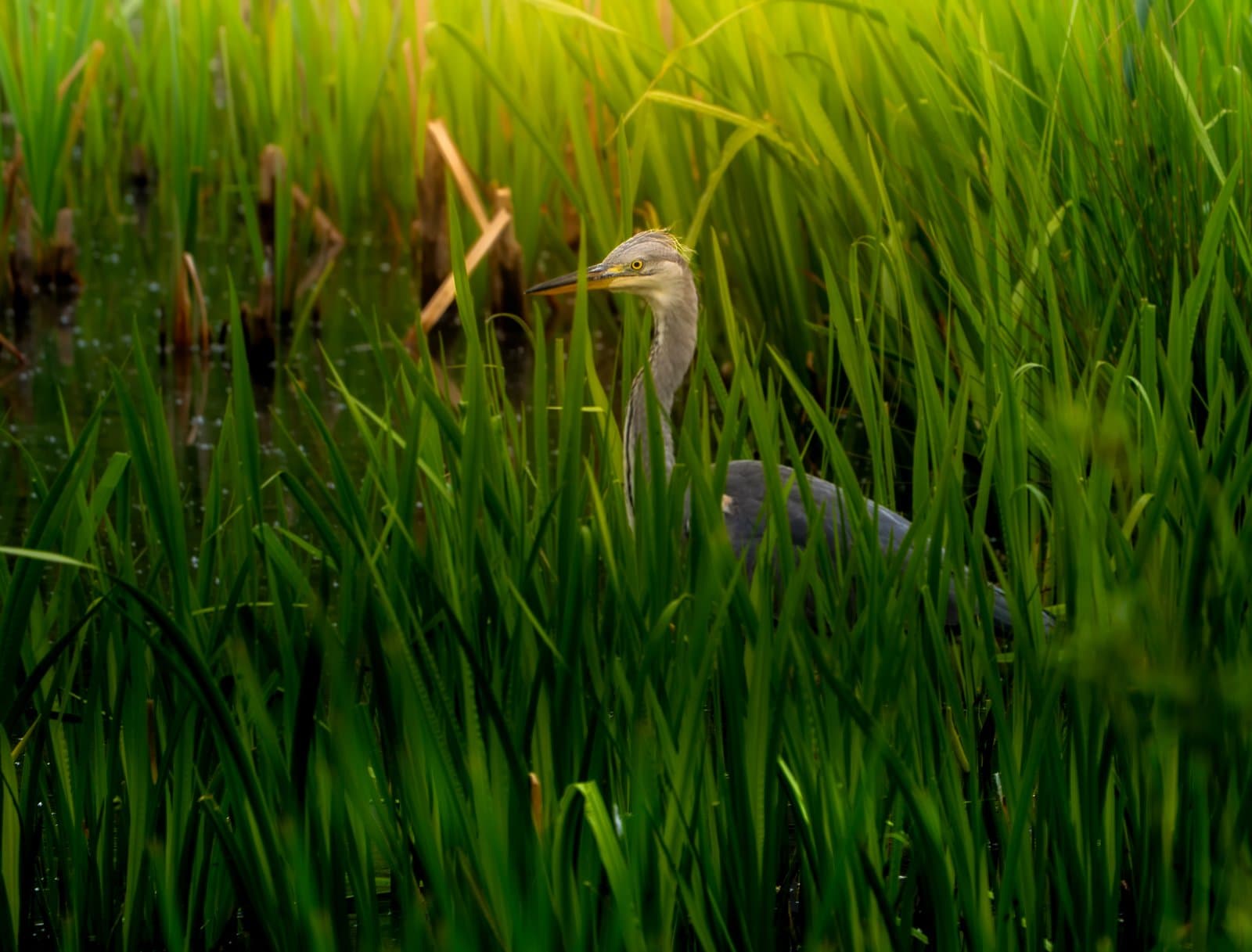
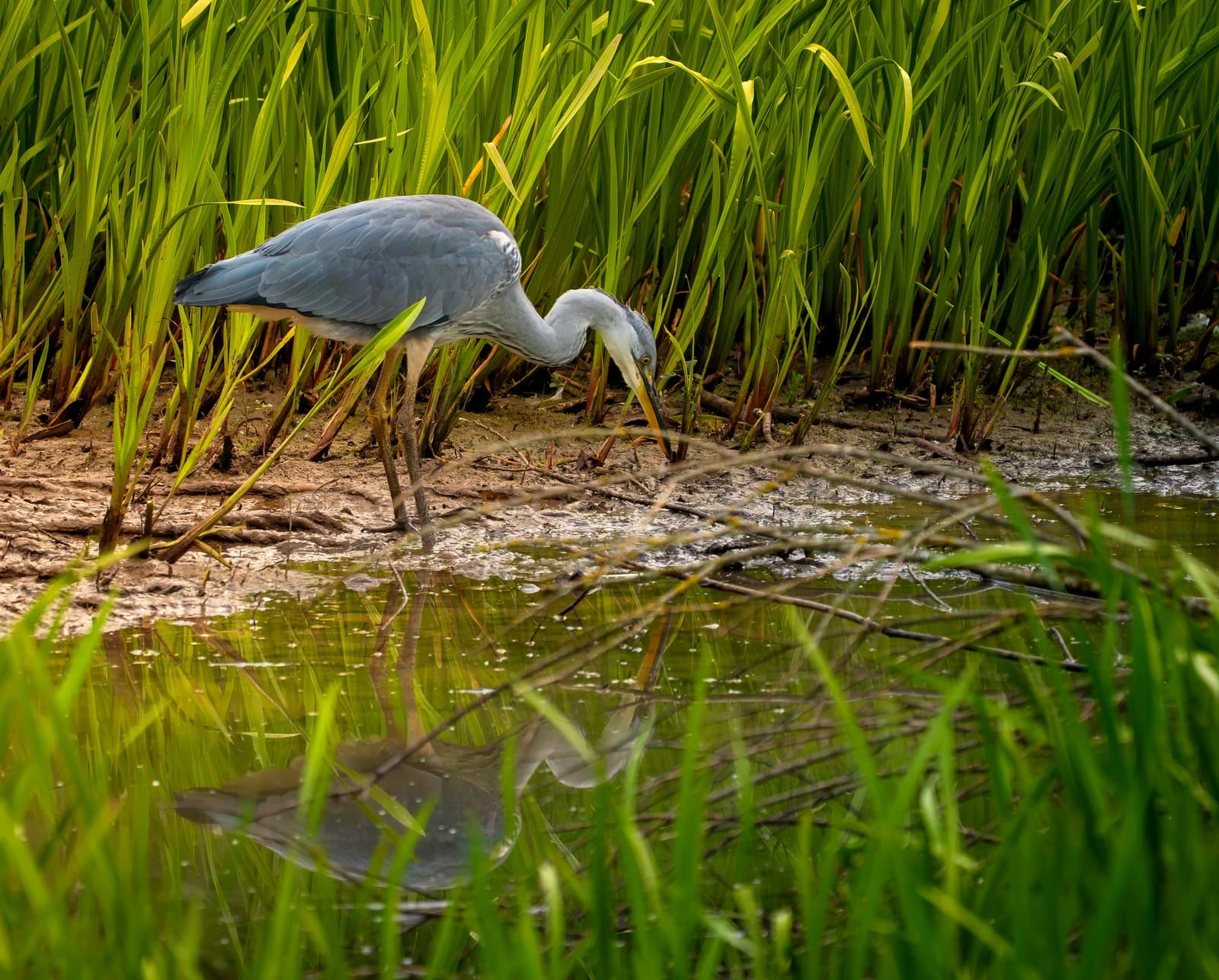
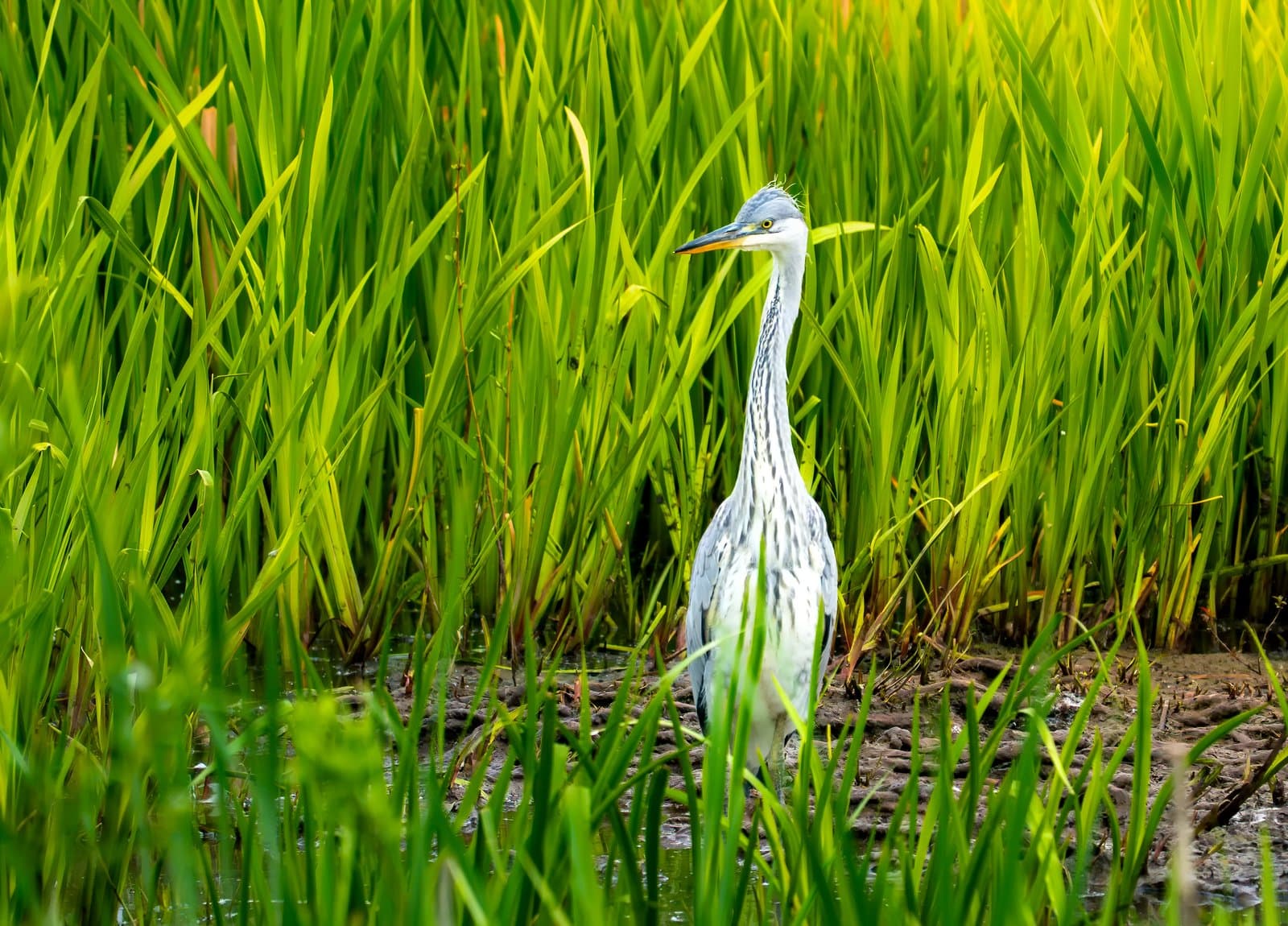
Heron peering through the reeds — eye AF locked through the vertical stems at the same focal plane as the bird, the kind of test the A6700's AI chip handles 95% of the time
Why I Chose the A6700
The A6700 was the second camera I bought, after the Sony A7 IV. I wanted a more portable body — something I could fit into a backpack alongside a useful selection of lenses and still have a reasonably light kit at the end of a long walk. It was never bought to replace anything; it sat in its own category, and it still does. Light, adaptable, willing to take whatever lens I felt like pairing with it that morning. My A1 stays on the heavy glass for the days when nothing less will do; the A6700 lives in the space everywhere else.
It functions well as a wildlife camera with the lightweight Sony 70-350mm fitted, but it equally takes the Sony 200-600mm for when I want extra reach. The crop factor isn't the reason I bought it — but on a smaller budget, when you're starting out and the lens prices are intimidating, the extra reach you get from APS-C is a real and useful bonus. The body is light, but it really comes into its own on long walks paired with a lighter lens like the 70-350mm.
The cost is considerably lower than my A1, and that difference matters when you're starting out and not yet sure what kind of photography you'll settle on. The A6700 will adapt to wildlife, landscape and street, and is light enough to carry to an event or use as a walk-around camera. As to whether it keeps up with full-frame, it depends entirely on which full-frame you compare it to. Against the A1 or the A9 III, no — and it shouldn't. Against the A7 IV or the A7R V it gets close on image size, with the difference in low light always falling in the full-frame's favour. Every camera has its pluses and minuses. This one isn't the best, but it's certainly a good one, and it can handle most tasks well enough.
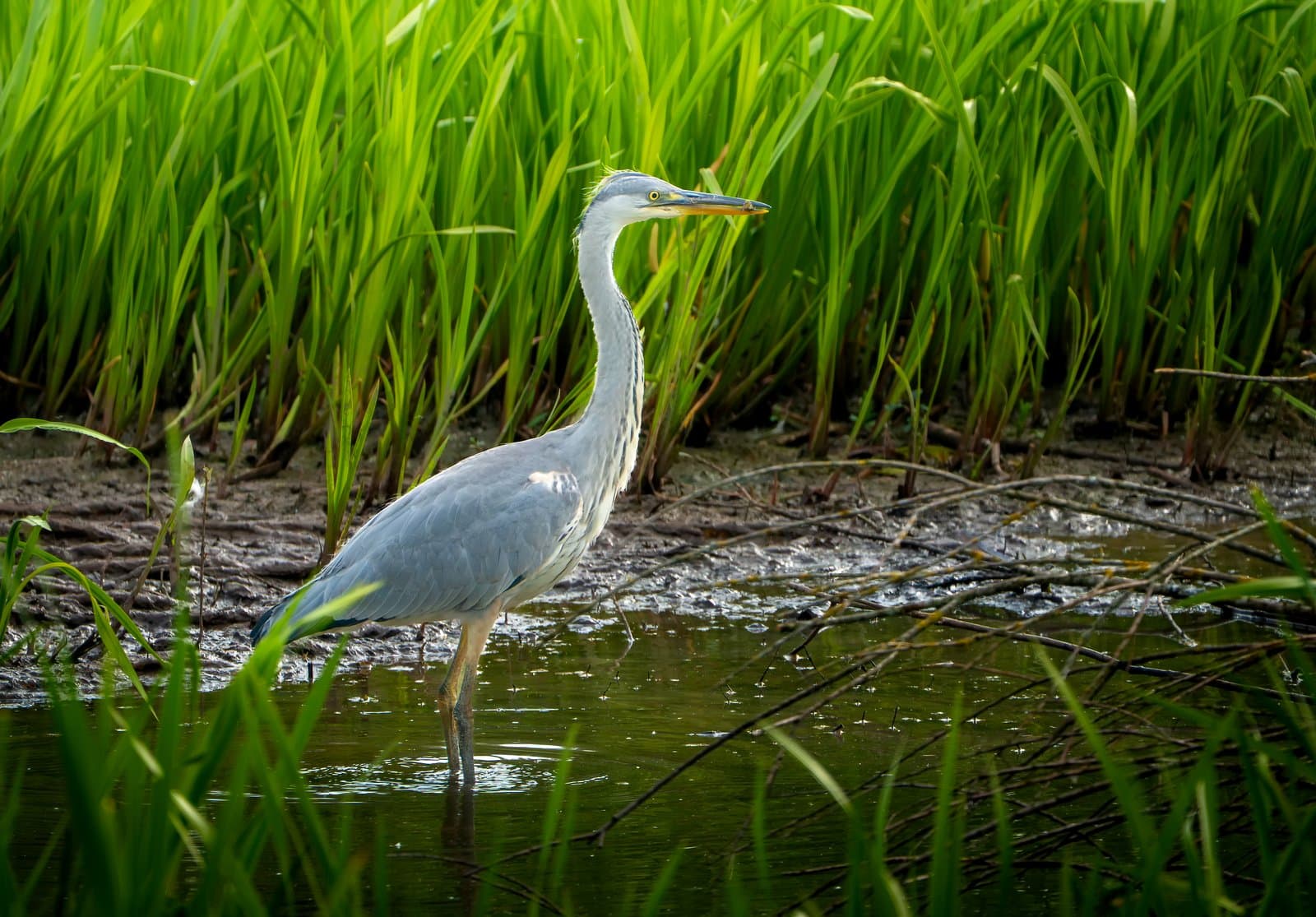
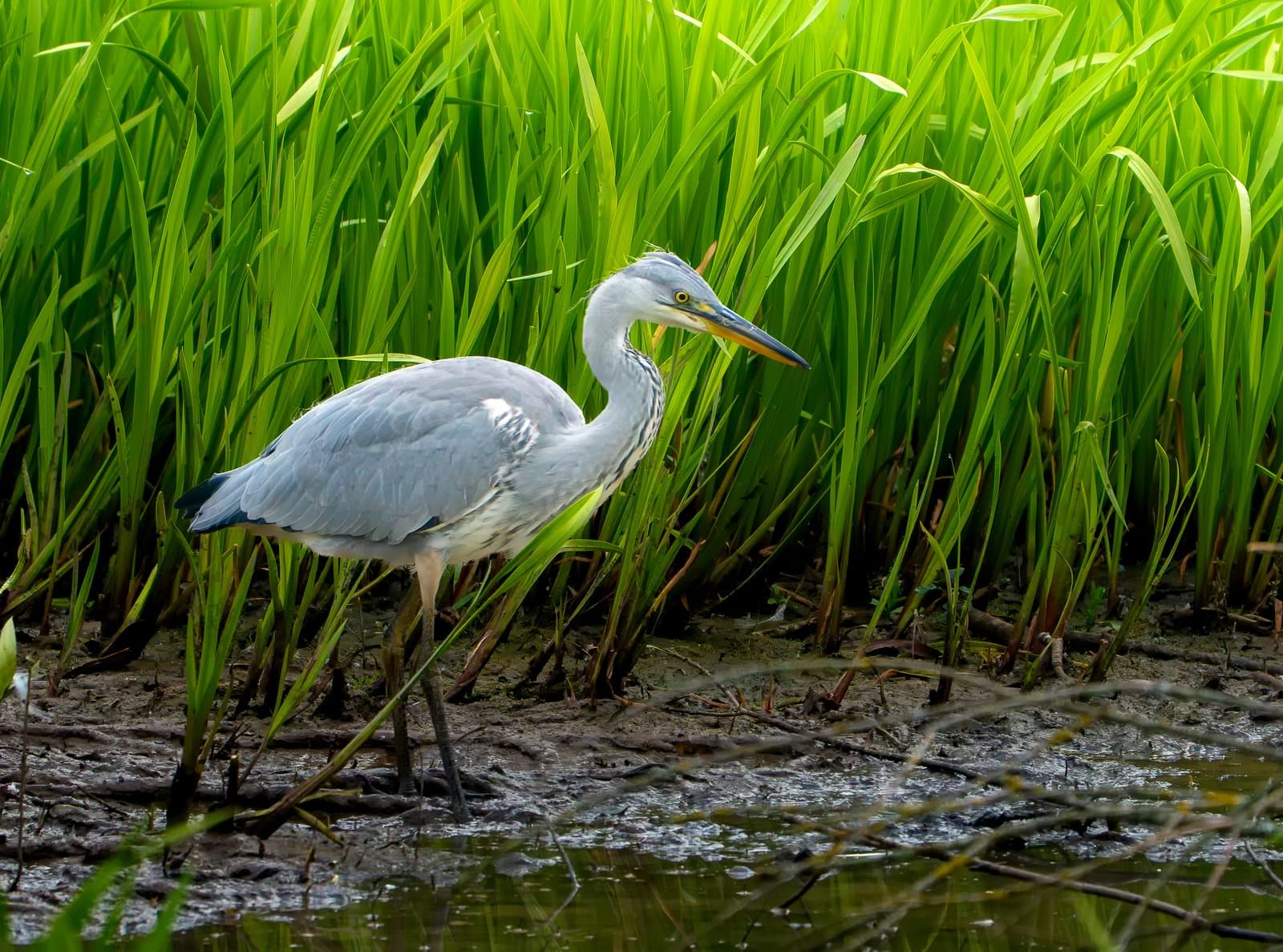
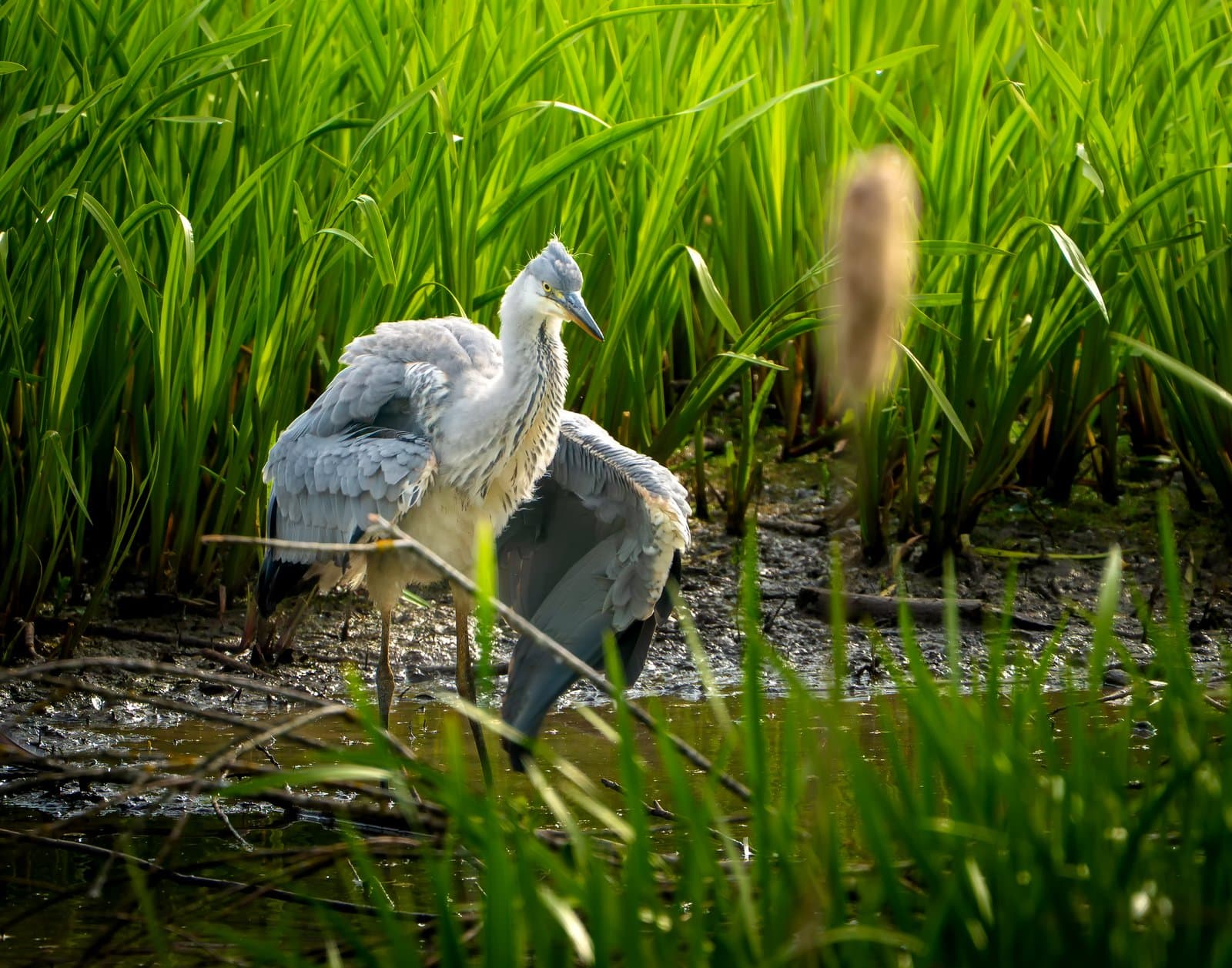
Grey heron wading deep in the reedbed at Pennington Flash — the kind of distant subject the 1.5× crop turns into a workable composition, framing the bird at 900mm equivalent with the 200-600mm at 600mm
The Crop Factor and the Reach Equation
APS-C bodies have one structural advantage for wildlife photography: a 1.5× crop factor. A 200-600mm zoom on the A6700 frames like a 300-900mm equivalent on a full-frame body. The 70-350mm — Sony's lightweight APS-C-native zoom — frames like a 105-525mm. None of that costs you any aperture or any image circle that the lens wasn't already drawing; it's free reach, and on a body this small it transforms what you can frame at the long end.
The "free reach" pitch comes with one honest caveat that most reviewers don't mention. Once you push past 600mm-equivalent, atmospheric conditions start eating into image sharpness. Heat shimmer over open water, haze on a still afternoon, fine particulates between you and your subject — invisible at 200mm, very visible at 900mm. By the time you're shooting an effective 900mm with the 200-600mm on the A6700, the air itself is a limiting factor on some days. The reach is real; the conditions for using it are narrower than the lens specs suggest.
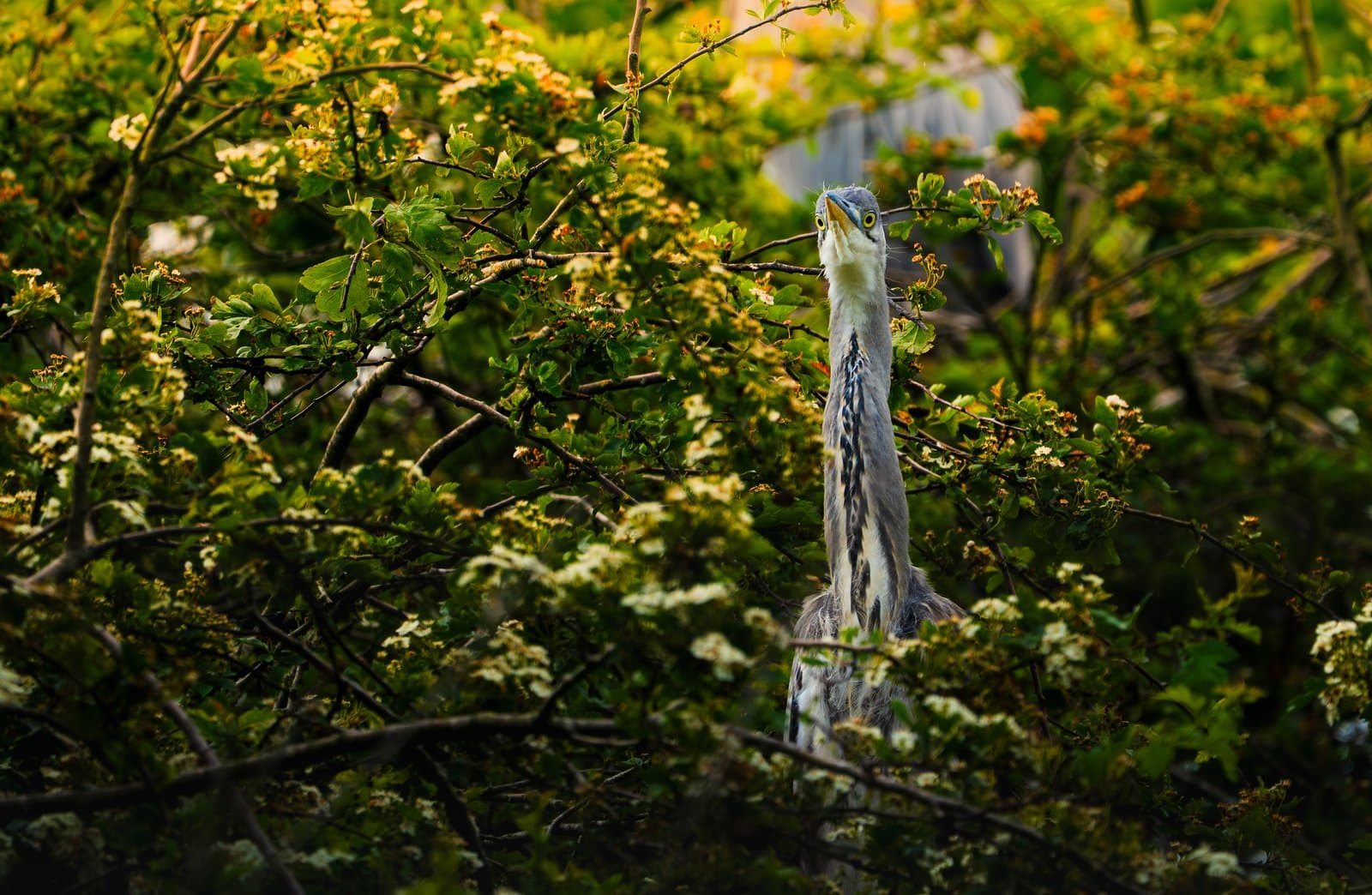
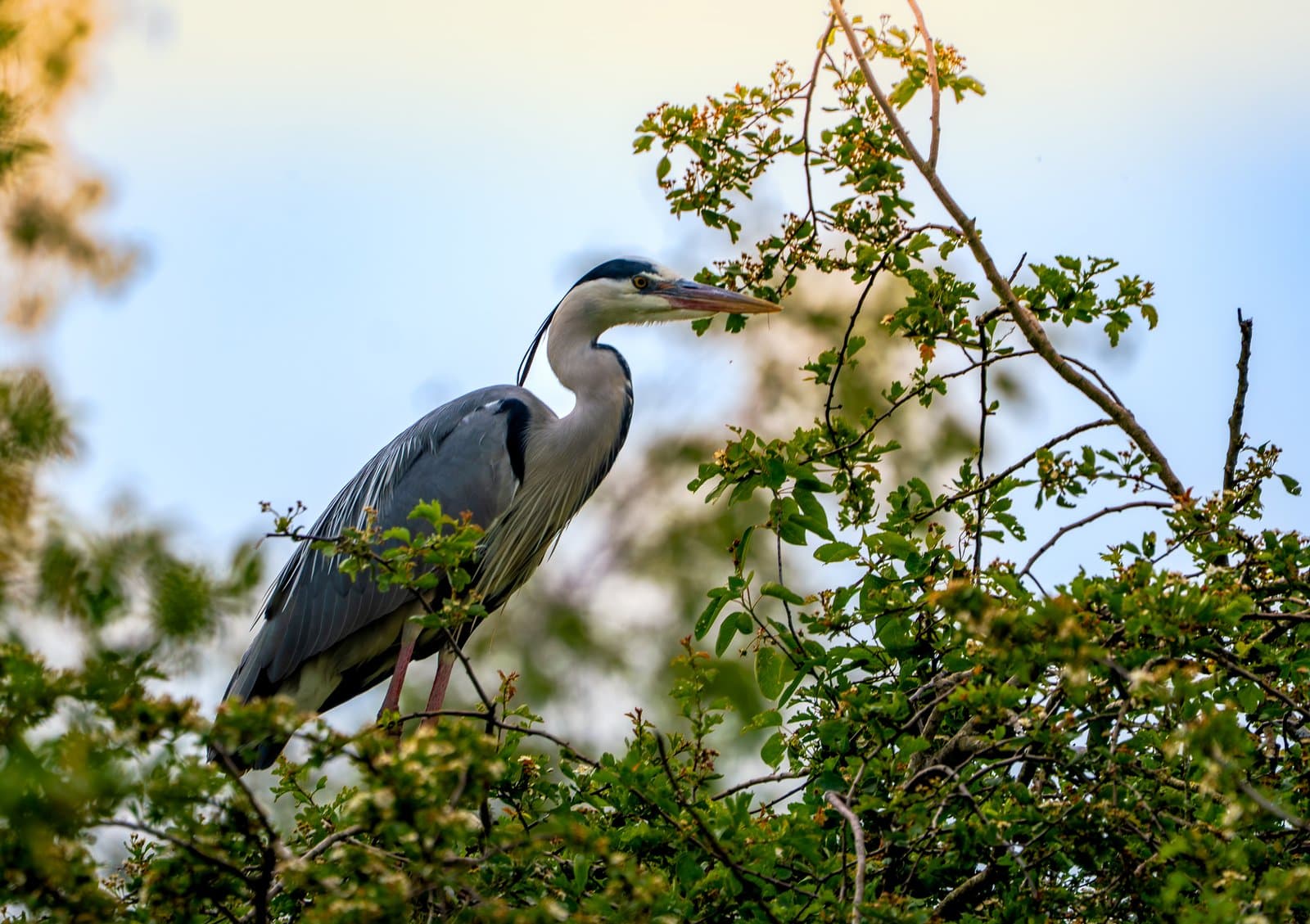
For most wildlife at most working distances — the herons in the reeds and the buzzards perched along the treeline at Pennington Flash — the crop factor pays its way. The crop also compensates somewhat for the lower megapixel count; what you lose in raw resolution you partly recover by framing tighter in-camera at the equivalent focal length. The 12 sample photos in this review were all shot with the 200-600mm on the A6700, putting them at 300-900mm equivalent — and these are tight, working compositions that would have been notably smaller in frame on a full-frame body at the same focal length.
AI Autofocus on an APS-C Body
The headline upgrade on the A6700 over the A6600 it replaces is the dedicated AI processing chip — the same neural-network silicon Sony first shipped on the A7R V. That is a genuine flagship system trickled down to a £1,450 body. Bird-eye, animal-eye and human-eye recognition runs on the same hardware regardless of which body it's mounted in.
In the field, the AF is really good. It will never stand up against the A1 — and it shouldn't, because the A1 is a flagship. I had the A6700 out at the Flash today and it missed a few shots I would not have missed with either the A1 or the OM-1. That's the honest answer. But for focusing through branches and reeds — the test conditions in which most of these heron photos were taken — I cannot fault it. Eye AF locked onto the bird's eye 95% of the time, even with the heron partly obscured by reed stems at the same focal plane. That is a remarkable hit rate on a body costing a quarter of the A1.
The gap, when it shows itself, is one of confidence rather than capability. The A1 puts the AF point on the eye and stays there. The A6700 puts the AF point on the eye and stays there 95% of the time. That last 5%, on the worst frames in the worst light, is what you pay another £5,000 to remove on a flagship.
Burst, Buffer and Action
Around ten frames per second is fine for herons in flight, swans, gulls coming in to the water, and most of the wildlife behaviour I shoot at Pennington Flash. I'd be more than happy with the speed 95% of the time. The buffer never bothers me at this rate for the kind of measured, considered shooting that APS-C bodies suit anyway.
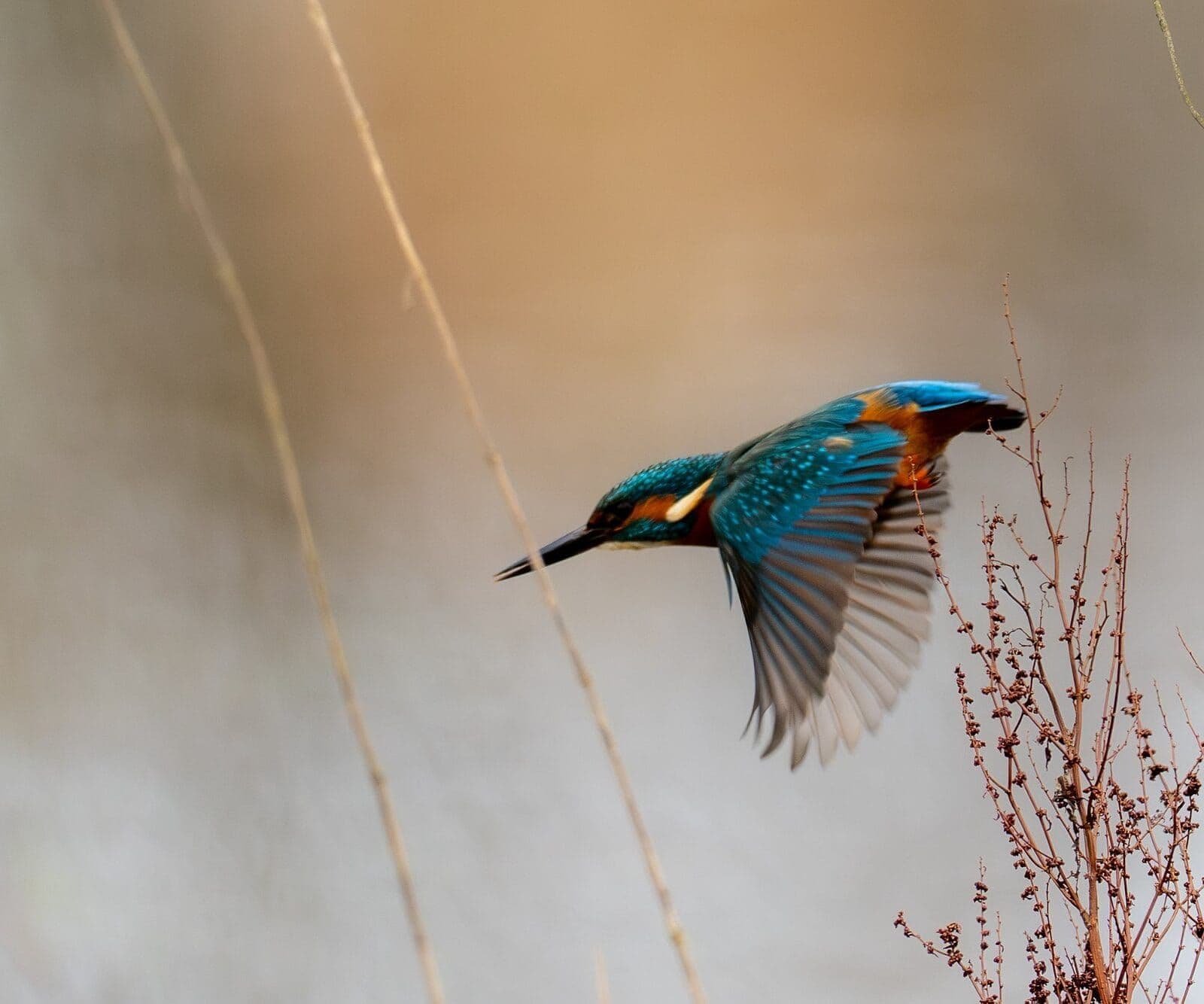
The ceiling is the kingfisher dive. When you absolutely need the camera to capture a moment that exists for a tenth of a second, in unforgiving light, with no second chance — at some point the A6700 will slow down and the A1 won't. That's the line. If kingfisher dives, fast raptors in pursuit, or decisive-moment sports work are your bread and butter, this is not the body. For everything else it is more than enough.
The same gap shows up in autofocus reaction speed. The A1 captures most situations that require a quick reaction; it focuses immediately and stays locked. The A6700 doesn't have that immediate lock-and-shoot-away ability — but it is still good enough, and "good enough" at this price is impressive.
Image Quality at 26MP
The 26-megapixel BSI sensor is a competent, modern chip. I have no problem taking the ISO up to 6400. It is much better to have the action frozen and sharp with a clean, blurry background than to have a clean low-ISO image with the subject smeared. Wildlife rewards shutter speed, and ISO is the price you pay for it; I'll pay 6400 worth without hesitating.
The A1 will take much higher ISO and remain usable. That is simply the physics of the sensor size — a full-frame sensor gathers more light per exposure than an APS-C one — and it's a reality you should be aware of when buying APS-C. All cameras have their pluses and minuses; the A6700's minus is here, in the noise floor at high ISO. It's not a flaw of the body; it's a property of the format.
I do adjust my metering slightly differently between bodies. Looking through the EVF and confirming the exposure is correct isn't always easy when you're capturing birds in flight, and the read isn't quite the same between the A6700 and a full-frame Sony — that comes down to learning the feel of each body rather than any failing of either. The colour science I'm happy with; A6700 files sit alongside my A1 and A7R V files in Lightroom without any heavy correction.
Video — A New Job for the A6700
The most interesting development in my use of the A6700 over the past year is video. I've been shooting more video than I was a year ago, and the focus in video mode on this camera is exceptional — it will track the eye of a heron as the bird moves through reeds, smoothly and stickily, in a way the same hardware doesn't quite match in stills. Going forward, video may be the main use for this body in my kit.
I shoot all kinds of wildlife on it, from robins through to herons at distance. I've used it in the hide, handheld with the ledge supporting the lens. I have a monopod that I should be using more often, and I may put it to work going forward. Audio I haven't tested — I edit with music overlaid in post, so the internal mics are a feature I simply haven't needed.
Switching from stills to video is as easy as flicking the dedicated mode dial on the top plate — a small but useful ergonomic win that the A1 doesn't have. Wildlife video is, in many ways, like wildlife photography: you go out not knowing what you'll see, and you use whatever mode best fits the situation in front of you. The A6700 is unusually good at letting you move between the two, and the AF behaviour in video mode is one of its genuine standout features.
Build, Ergonomics and Battery
The body does not have the same grip and feel as the A1 — but it won't, because it's smaller for a reason. With the 200-600mm attached this doesn't really affect me, because I'm supporting the lens itself with my left hand rather than balancing the weight through the camera. Long sessions in a hide, with the lens resting on the ledge or on a knee or on a beanbag, and the body sits comfortably behind it doing its job.
The most annoying part of the A6700's ergonomics is re-centring the focus point when it has wandered during tracking. On Sony's full-frame bodies, a double-tap of the rear joystick recenters the AF point immediately. On the A6700 you have to either flip out the touchscreen and tap (and I normally keep mine closed, to protect the screen from damage in the field), or step the point back to the middle using the directional arrows on the circular control wheel. Neither is fast. If Sony adds a rear joystick to the next generation of this body, I'd be ordering one on day one.
The EVF is not as good as the A1's — but I wouldn't expect it to be. It's sufficient for the job, always bright enough, and never gets in my way. The battery, which is the same NP-FZ100 that powers the rest of the modern Sony lineup, always feels ample. I never find the need to swap batteries during a session.
A note on weather. I always check the forecast, and I never take any of my Sony cameras out in poor weather. For wet days I take an OM-1, because the OM bodies are fully weather-sealed. The A6700 is rated as "dust and moisture resistant", which is not the same thing as weather-sealed, and the distinction matters in the field. If you need a camera that genuinely doesn't care about rain and mud, this is not it.
The single SD slot has not been an issue. For commercial work I'd reach for a body with dual slots so I had a real-time backup; for personal wildlife work, one slot is fine.
Who Is This Camera For
This should really have been my first camera. Walking into a camera shop with the knowledge I have now, the A6700 would have been the better suggestion for a beginner not yet knowing the direction their photography would take. I was told the Sony A7 IV was the answer, and while it's a great camera for landscapes and portraits, it wouldn't be my choice for wildlife, and it's not where I'd send someone who doesn't yet know what they want to shoot.
For lenses, the Sony 200-600mm is the right pairing for serious wildlife work if the budget allows. If the budget is tighter, the Sony 70-350mm is an excellent, sharp, lightweight, and substantially less expensive alternative — it doesn't have the same reach, but it's a far easier lens to carry on a long walk and the optical quality is genuinely impressive.
If I had to make a personal recommendation to someone buying their first dedicated wildlife setup at this price point, with no prior commitment to a system, I would point them at a used OM-1 paired with the OM 300mm f/4 — both bought secondhand, the combination comes out at roughly the same total spend as a new A6700 with a long zoom. The OM-1 is fully weather-sealed, the 300mm f/4 frames as a 600mm equivalent on Micro Four Thirds, and the OM system is built around wildlife in a way Sony's APS-C lineup isn't.
But if you've decided the Sony ecosystem is for you — for the lens selection, for the AI AF, for the path through to full-frame later when budget allows — then the A6700 is where I'd start. The E-mount catalogue runs from kit zooms through to GM primes, and your lenses travel with you when you upgrade the body. I cannot see any real reason not to buy this camera.
The Bottom Line
If you want an all-round camera that lends itself to all types of photography, with a wide selection of lenses and is small enough to carry around — with lenses that are light but still very good optically — this is a very good starting point, and probably where I should have started.
The A6700 is not a flagship, it doesn't pretend to be, and you shouldn't buy it expecting flagship results. Comparing it to the A1 is like comparing a three-wheeler van to a Porsche — the two are built for completely different jobs, and they're priced accordingly. But within its own category, the A6700 is one of the best APS-C bodies on the market today. It's more capable across more genres than any single body I've ever owned, and it's the body I'd put into the hands of anyone walking into a camera shop today, not yet knowing where their photography will take them. Four out of five stars, and the missing star is a rear joystick away from being earned.
Tested at Pennington Flash with the Sony FE 200-600mm f/5.6-6.3 G OSS.
Pros & Cons
What I Like
What Frustrates Me
Specifications
Sample Images
More Wildlife Photography Equipment Reviews
Comparing options? Read my other field reviews: Sony A1 wildlife review, Sony A7R V wildlife review, OM System OM-1 Mark II wildlife review, Sony FE 200-600mm f/5.6-6.3 G OSS wildlife review, Sigma 500mm f/5.6 DG DN OS Sports wildlife review, OM System M.Zuiko 300mm f/4 IS Pro wildlife review and OM System M.Zuiko 50-200mm f/2.8 IS Pro wildlife review.
Sony A1
The best camera I've ever owned. The Sony A1's bird eye detection autofocus is in a class of its own for wildlife photography, and the 50MP sensor gives you the resolution to crop heavily and still produce stunning prints. Five years on, it still does everything I need.
Sony A7R V
An outstanding portrait, landscape and detail camera that also handles wildlife when speed isn't the priority. The 61MP sensor gives extraordinary cropping reach with the 200-600mm, but the non-stacked sensor and rolling shutter make this a complement to an A1 rather than a replacement.
OM System OM-1 Mark II
After twelve months of ownership — and several years of OM and Olympus bodies before it — the OM-1 Mark II is the camera I'd keep if I could only keep one camera system. Lighter than my Sony kit, completely weather sealed, and with autofocus on par with the A1, it covers wildlife stills, wildlife video, landscape and street photography in one body.
Sony FE 200-600mm f/5.6-6.3 G OSS
Outstanding super-telephoto zoom with internal zoom design and excellent sharpness throughout the range. After eighteen months of wildlife shooting on Sony bodies, this is still the lens I'd recommend to anyone — beginner, enthusiast or working pro — buying their first serious wildlife setup.
Sigma 500mm f/5.6 DG DN OS Sports
A 500mm prime that has largely replaced my Sony 200-600mm thanks to its remarkable portability, but the 3.2m minimum focus distance, lack of teleconverter support on Sony, and 15fps burst cap hold it back from perfection.
OM System M.Zuiko 300mm f/4 IS Pro
600mm-equivalent f/4 reach in a sub-1.3kg package. AF that locks on through branches where Sony and Sigma rivals struggle, 1.4m close focus that handles dragonflies and reed buntings on the same trip, and Sync IS for handheld work in any weather.
OM System M.Zuiko 50-200mm f/2.8 IS Pro
A constant-f/2.8, 100-400mm-equivalent wildlife zoom that combines fast bird-in-flight autofocus, internal zoom handling and 0.78m close focus in a 1,075g lens. Expensive, but unusually capable as a single handheld lens for birds, larger wildlife and low-light work.