I get to WWT Martin Mere about once a month. It is the third of the three reserves I rotate through with Pennington Flash and Leighton Moss, and it is the one where my routine looks least like the routine I have at the others.
What Martin Mere Actually Is
Martin Mere sits near Burscough in West Lancashire, run by the Wildfowl & Wetlands Trust. It is a mixture of habitats — open shallow meres, fenced paddocks for the captive wildfowl collection, an otter pen, reedbed walks, and a network of hides that look out over a combination of water, scrape and open fields. It is the most "set up" of the three reserves I shoot — a working visitor centre, café, gift shop, child-friendly captive areas, and managed feeds. That is not a criticism; it is a different proposition from the wild-reedbed seriousness of Leighton Moss or the urban-public character of Pennington.
On paper as well as in person, this is a serious wetland. Martin Mere is a Site of Special Scientific Interest and a wetland of international importance under the Ramsar convention, recognised above all for its wintering wildfowl — the thousands of whooper swans and pink-footed geese that pour onto the mere from Iceland each autumn are the reason the designation exists, and the reason photographers make the trip between November and February. The centre was opened by the Wildfowl & Wetlands Trust in the 1970s as one of Sir Peter Scott's network of wetland reserves, and the official WWT Martin Mere page carries current prices, feed times and opening hours.
The Single Issue That Shapes My Visits
Martin Mere does not open until 9:30 am. That is the biggest single difference between Martin Mere and the other two reserves I photograph. The first three hours of light — the working hours every wildlife photographer plans their day around — are gone before the gate even opens. I cannot do dawn raids here. Whatever happens at first light at Martin Mere, I never see, and the photography I do at Martin Mere therefore happens in the same daylight hours that everyone else is shooting in.
I have made my peace with that, but I want to be honest about it up front: if you are reading this trying to decide where to drive at 4 am, do not drive to Martin Mere. Martin Mere is a midmorning-to-midday reserve, and my routine here reflects that.
Why I Walk the Reedbeds Rather Than Sit in the Hides
When I get to Martin Mere I do something a lot of regulars don't — I walk the reedbed paths instead of going straight to the hides. There is a section of reedbeds away from the main hide complex where you generally have the trail to yourself, and that is where I have taken my favourite Martin Mere images.
The shot I keep coming back to is reed buntings balancing on the very top of the reeds. With the OM-1 Mark II and the 300mm f/4 Pro plus the 1.4× teleconverter, I can get the bird sharp at the top of the reed with the surrounding reedbed melting into a uniform light beige background — a clean, painterly frame you can't easily get at the busier hides. The reedbed section is also one of the few places at Martin Mere where you can stand quietly with no one else around. For me, that's worth more than the visibility you get from the hides.
The Stoat With the Egg
The single best Martin Mere encounter I have had, I had on the reedbed walk, not in a hide. Walking quietly along the path I came across a stoat pushing a stolen egg along the ground with its nose, completely fixated on getting the egg back to wherever it was going to eat it — so fixated that I was directly behind it for a long stretch of frames and the stoat never registered I was there. That kind of encounter is not rare at Martin Mere; what's rare is that most visitors never see them because they are inside the hides while it happens. If there is one thing I would take away from this guide, it is that. **Walk the quiet sections.**
The Hides — Honest Read
There are a number of hides at Martin Mere. The big one is the Ron Barker Hide, which is by some distance the most popular. If you can get a window seat next to one of the regulars — the people who come in three times a week and know exactly what is on the water that morning — take it. The regulars know more than the wall posters, and a quiet conversation with one of them in the first ten minutes of your visit is the most useful intelligence you will get all day.
Ron Barker is where you will get your best chance of kingfishers at Martin Mere, and it is where my favourite raptor sightings have happened — marsh harrier, buzzard, and kestrel are the three I keep coming back for. On a busy day Ron Barker fills up early and stays full all day. Some people set up at first light and stay until closing. That isn't me. I'd rather walk a circuit and be back in the hide an hour later than miss what is happening in the rest of the reserve.
The other hides are a mixture: some look out over water, some look out over open fields, and some have small windows over little pools. They all have their windows of activity. I walk past them all on a normal visit and stop wherever something is in front of me. I don't have a strong "best hide for X" answer beyond Ron Barker for kingfishers and raptors — partly because I don't sit long enough in any one of them to have earned that opinion.
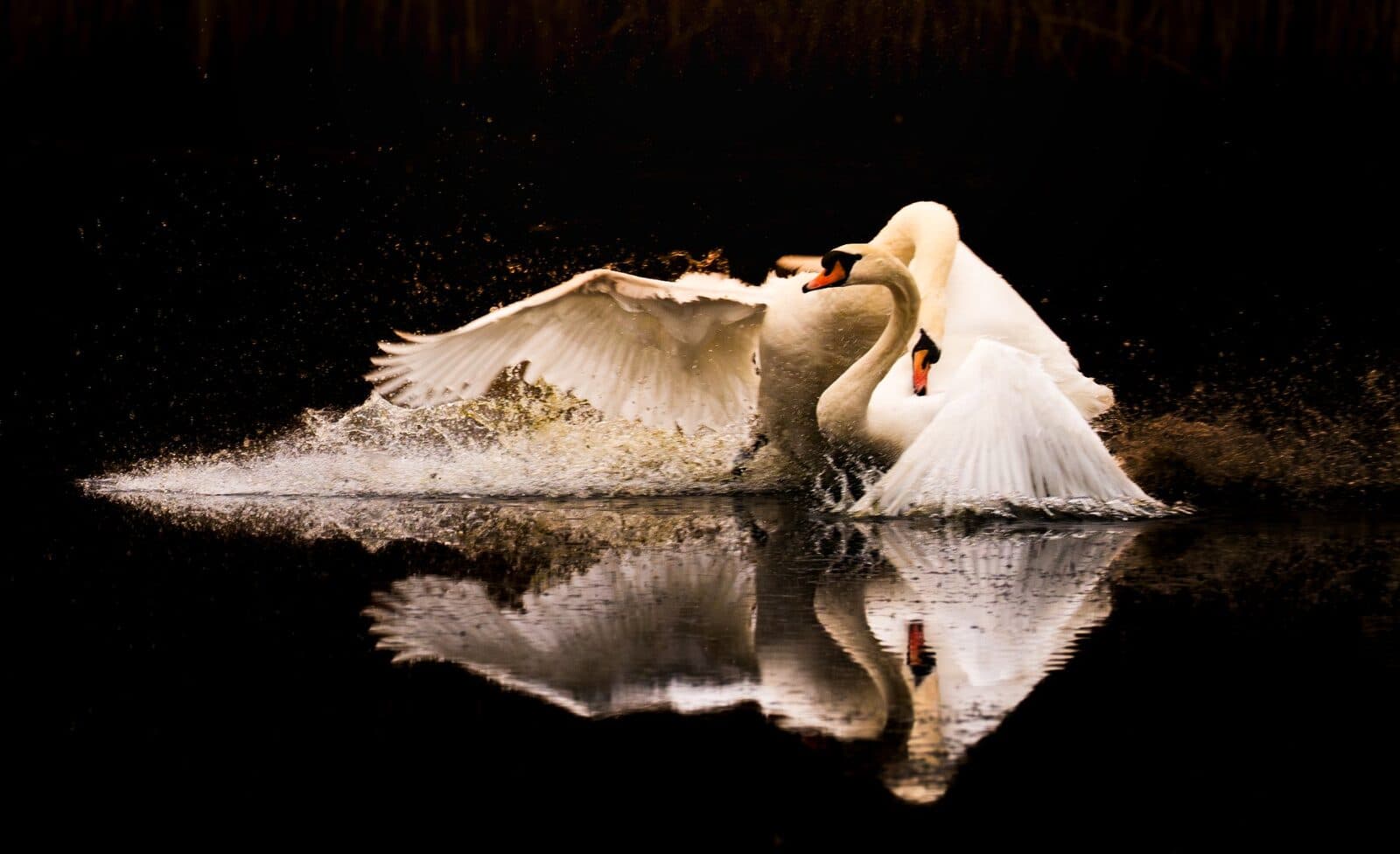
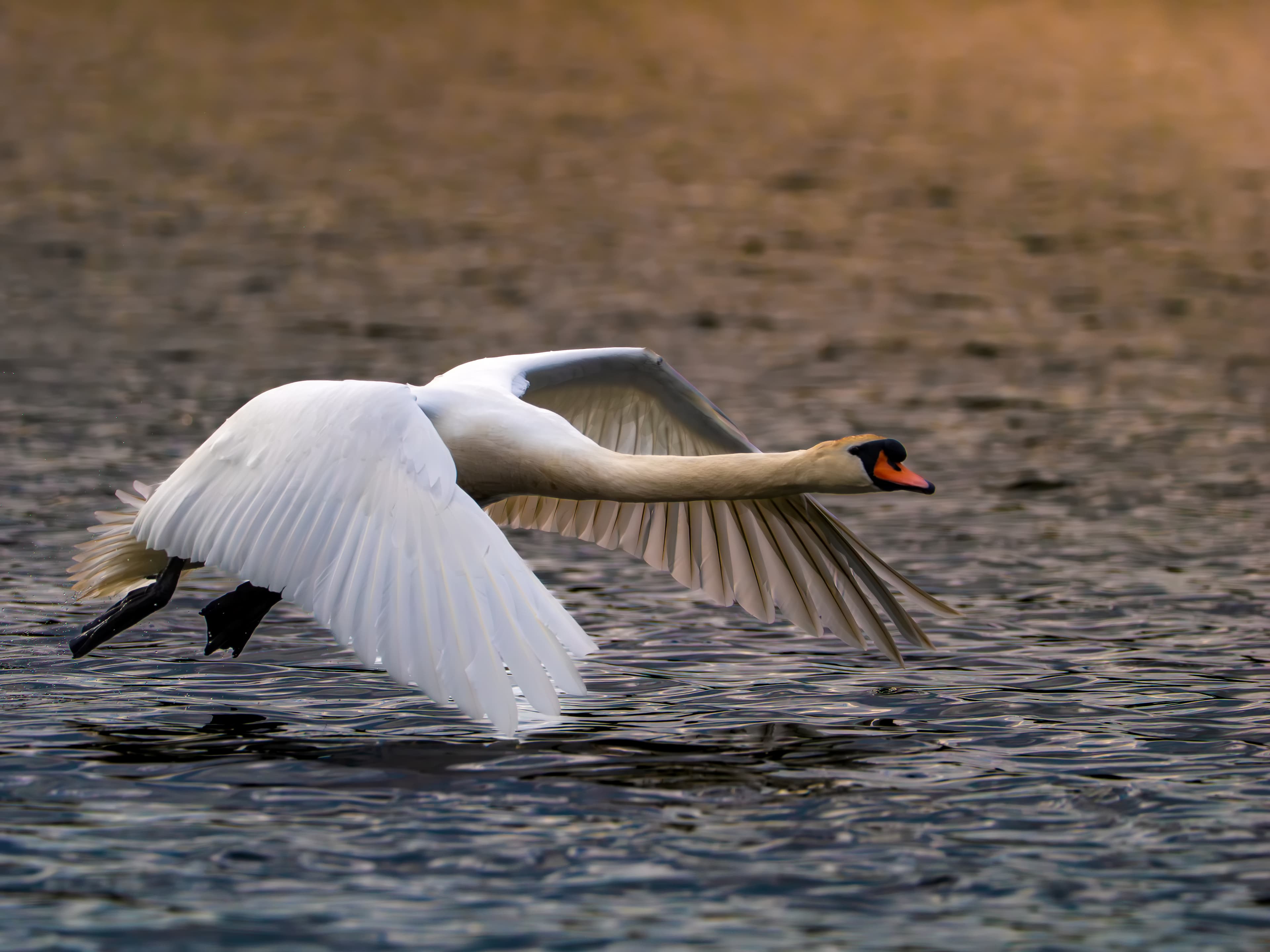
The Whooper Swans
Whooper swans are the headline winter species at Martin Mere, and the WWT runs a managed feed in the colder months that pulls thousands of birds onto the water. I have not personally been at Martin Mere when the morning feed has happened. I assume the morning feed must take place before 9:30 am because I have never seen one in progress on my visits — and that is a direct consequence of the gate timing. The afternoon feed is a different story; the swans are visible from the dedicated swan-watch hides on the right-hand side of the reserve, accessed through a gate at the end of the main path that leads on to Ron Barker. If swans are your single reason to visit, plan around the published WWT feed times rather than around the morning, and arrive in good time before the feed starts.
I want to be honest: the WWT feed is a managed encounter, not a wild one, and that shapes the kind of photograph you get. The advantage is access — you will see whooper swans in numbers from a comfortable hide, with the birds close. The trade-off is that the photograph is the same photograph everyone in the hide is taking. For me that is not enough on its own, but I understand why people drive a long way for it.
The Captive Collection
A significant part of Martin Mere is given over to a captive wildfowl collection — fenced areas with managed populations of ducks, geese and swans, plus an otter pen. These are largely aimed at children and family visitors, and there are paid-entry sections within the wider reserve. I'm not the target audience for any of this, but I still walk through it because there is a section with Mandarin Ducks that is always worth a stop. Photographically, captive birds are honest if you label them as such — but they are not what I'd call wildlife photography. The Mandarin section is the one I'll spend ten minutes in, get the shot, and move on.
The Café
The café sits overlooking a small stretch of water, with an indoor area and an outdoor terrace. On a sunny day the outdoor seating is one of the nicer places in the reserve to sit. On my last visit the kitchens were closed for refurbishment and the menu was reduced to hot drinks, sandwiches and some cakes — which is worth knowing if you are planning the trip around lunch. Standard food service is expected to return after the refurb; check the WWT Martin Mere page for current status.
Photography Kit — What I Actually Bring
The standard kit for Martin Mere is the same standard kit I take to Leighton Moss. The OM System OM-1 Mark II with the M.Zuiko 300mm f/4 IS Pro and the 1.4× teleconverter is the body I pick up first — it covers the reedbed work and most of the hide ranges, and it is my go-to setup for the reed bunting frame at the top of this guide.
The second body is the Sony A1 with the 200–600mm zoom and the 1.4× teleconverter mounted. The reason for the second system at Martin Mere is the same as Leighton Moss: reach. The whooper swan section is at distance, the open fields where the marsh harrier and kestrel work are wide, and 600mm is sometimes not enough — 840mm is. No tripod, no monopod. Hand-held throughout.
Practical Information
Parking is free and plentiful — there is no fight for a space at Martin Mere on a normal weekday. Entry is paid for non-WWT-members. If you intend to visit more than once a year, become a WWT member. The trick most first-time visitors don't know: if you buy the WWT membership on the same day as your visit, the entrance cost you have just paid can be used as part payment toward the annual subscription. Ask at the entrance desk before you walk in. Toilets are plentiful and well-distributed across the site. Standard hours are 9:30 am to 5 pm in winter and 9:30 am to 5:30 pm in summer.
Martin Mere Compared with Pennington and Leighton Moss
If a friend asked me where to spend their one Saturday, my answer depends on where they are in their photography. Martin Mere is the most accessible of the three reserves and the easiest day out — flat paths, warm café, family-friendly, set feeds, and a captive section for the children. It is also the most tightly time-windowed because of the 9:30 am gate, which makes it the worst of the three for serious dawn photography. For someone learning their kit and learning what they actually need from a reserve, Martin Mere has its place — you will get clean frames at workable distances, and you will work out, before you spend serious money on long glass, whether you actually want a 600mm lens.
For someone past that stage, Pennington Flash and Leighton Moss are where I'd send them first. Martin Mere is the visit I make when I want a different rhythm — a quieter walk, a stoat with an egg, reed buntings at the top of the reeds, and a sit-down with a coffee.
The Bottom Line
Once a month is about right for me at Martin Mere. It is a nice place to visit, the reedbed walks deliver photographs you can't get at the hides, and the kit I take here is the same kit I take to Leighton Moss. The 9:30 am gate is the limitation that defines the reserve for a serious wildlife photographer — accept it, plan around it, walk the quiet sections, and Martin Mere will give you a different kind of frame than the other two reserves do.