Sigma 500mm f/5.6 DG DN OS Sports Review
A 500mm prime that has largely replaced my Sony 200-600mm thanks to its remarkable portability, but the 3.2m minimum focus distance, lack of teleconverter support on Sony, and 15fps burst cap hold it back from perfection.
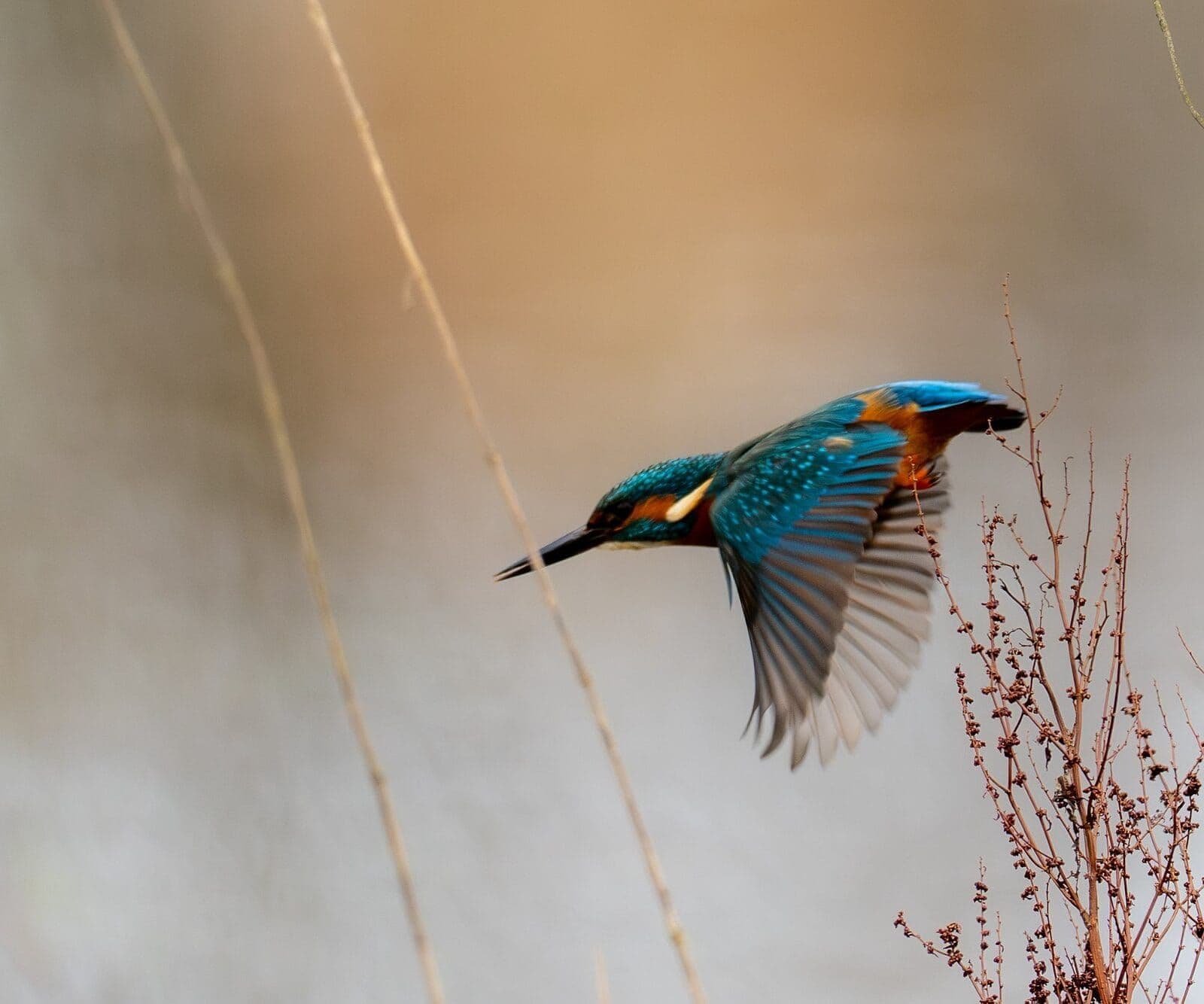
Kingfisher in flight — the Sigma's HLA motor tracked confidently at f/5.6
The Sigma 500mm f/5.6 DG DN OS Sports is a lens that has genuinely changed how I shoot wildlife — and yet I still find myself frustrated by it on a regular basis. At just 1,365g it has largely replaced my Sony 200-600mm G as my daily wildlife lens, but the 3.2-metre minimum focus distance, the lack of teleconverter support on Sony E-mount, and a 15fps burst rate cap imposed by Sony on all third-party lenses mean it falls short of being the perfect lens it could have been. If you can work around those limitations, the portability and image quality are outstanding. If you can't, the Sony 200-600mm remains the safer, more flexible choice.
Why I Bought It
I've spent a lot of time walking the trails and hides at Pennington Flash with the Sony 200-600mm mounted on my A1. It's a superb lens, but after a full day of carrying over 2kg of glass plus the camera body, you feel it. My shoulders know about it the next morning. When Sigma announced a 500mm prime at under 1.4kg, I was immediately interested. The promise was simple: sharper images, brighter aperture, and significantly less weight. On paper, it ticked every box.
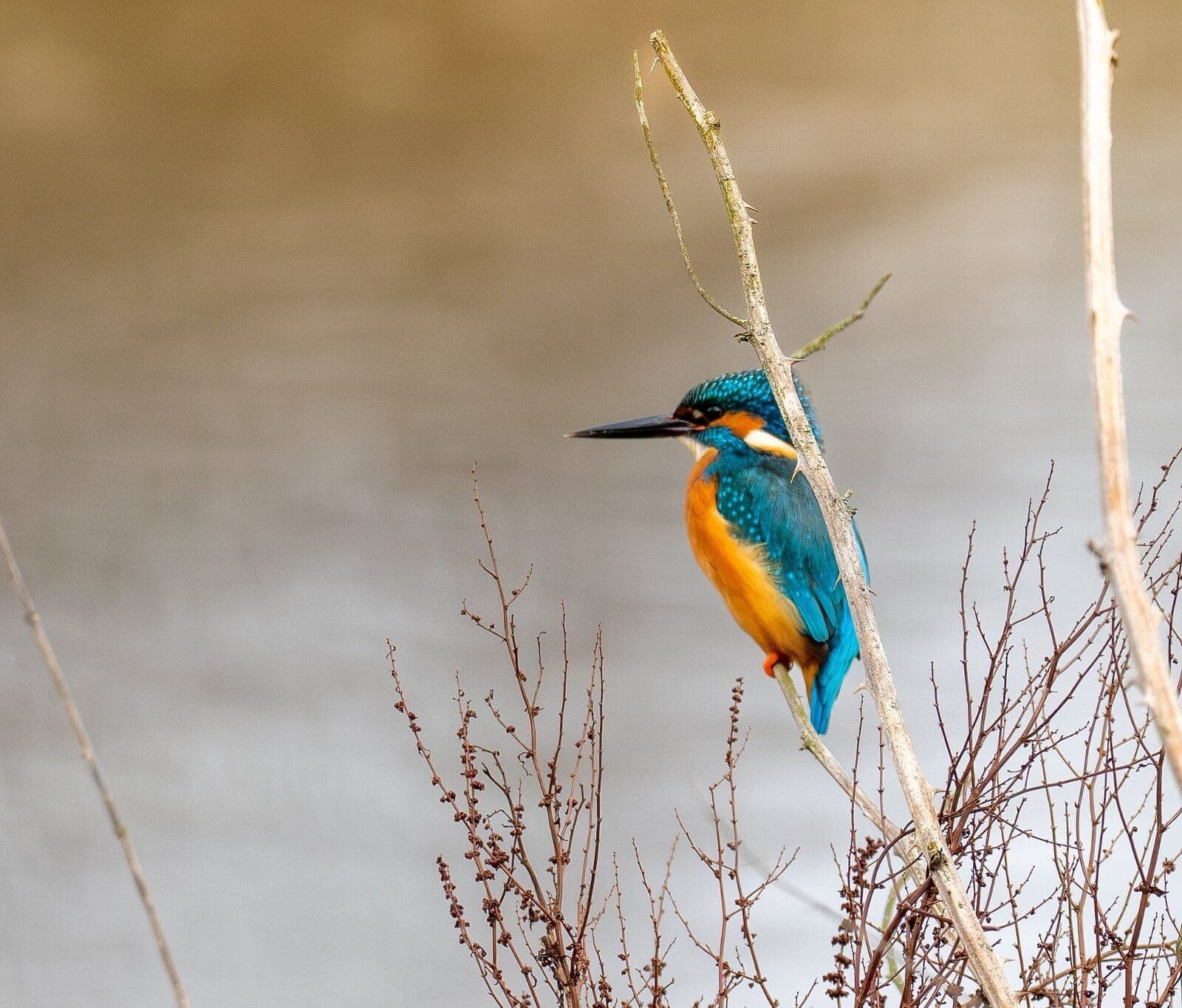
Kingfisher perched — colour rendition and background separation at f/5.6, Pennington Flash
Build Quality & Handling
This is a Sigma Sports lens through and through. The build quality is excellent — dust and splash resistant, with a magnesium alloy tripod socket that's Arca-Swiss compatible out of the box. There's a manual aperture ring (with a de-click switch), three customisable AFL buttons, a focus limiter switch, and two OS mode options. Everything you'd expect at this price point, and it all feels solid without adding unnecessary weight.
The real story, though, is the size. When you first pick it up, you genuinely question whether it's actually a 500mm lens. At 237mm long and 1,365g on Sony E-mount, it's shorter and barely heavier than lenses half its focal length. I can comfortably walk the full circuit at Pennington Flash — past the Horrocks, Ramsdales, and Bunting hides — shooting handheld all day without fatigue. That simply wasn't possible with the 200-600mm without a monopod or frequent rests.
Paired with the Sony A1, the total kit weight is around 2kg. That's less than the 200-600mm lens alone. For a photographer who covers ground on foot at nature reserves rather than sitting in one hide all day, this is transformative.
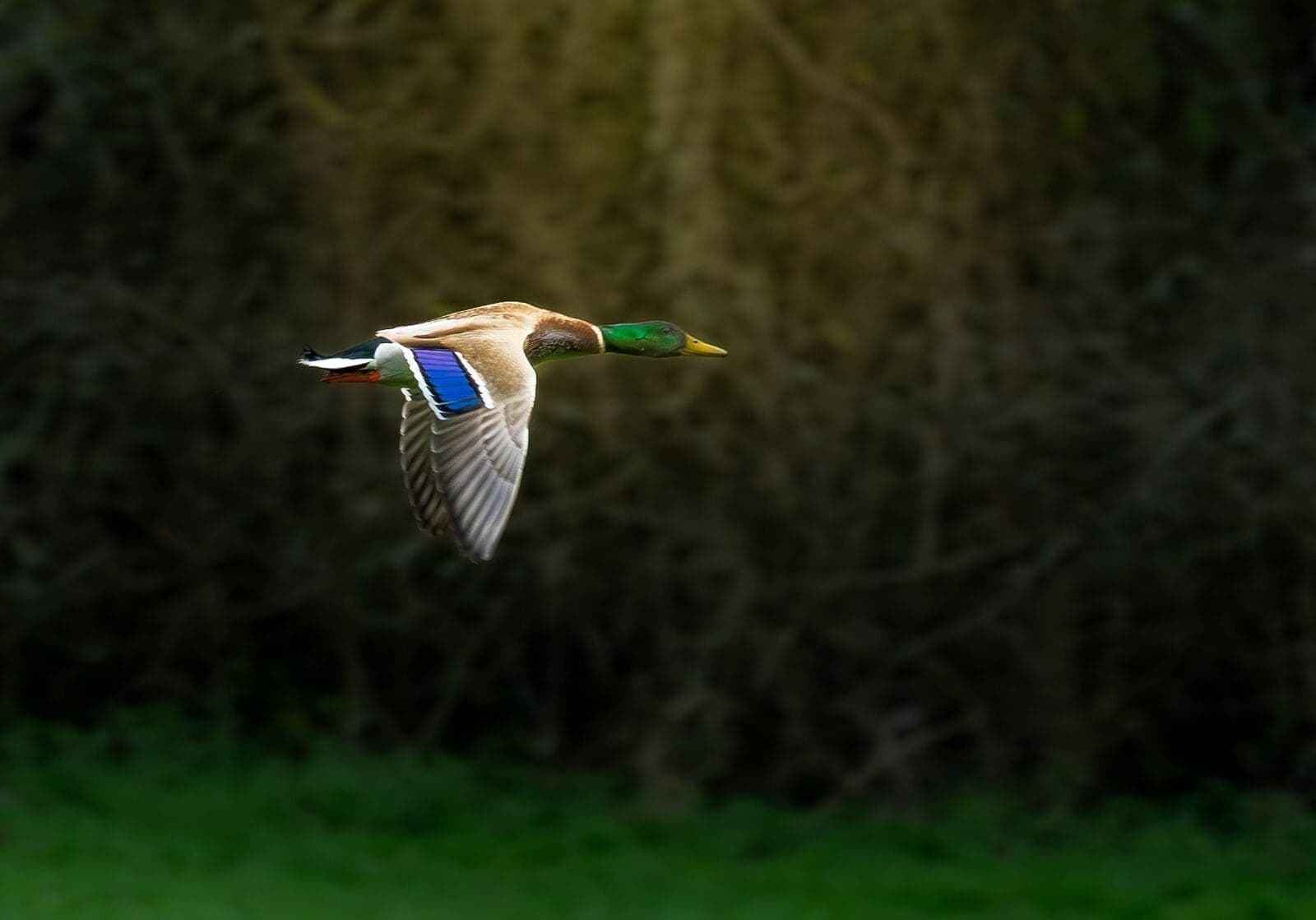
Mallard drake in flight — real-time tracking locked on against a busy woodland background
Autofocus Performance
On the Sony A1, the HLA (High-response Linear Actuator) motor delivers fast, confident autofocus. Bird eye detection locks on reliably, and real-time tracking keeps up well with subjects moving across the frame. I've had consistent results with birds in flight over the Flash, where subjects are often moving against busy backgrounds of reeds and water. The AF is noticeably quieter than the 200-600mm too, which is a welcome bonus when shooting from hides where sound carries.
In lower light — early mornings in winter at Pennington, for instance — the AF does slow down, but that's expected at f/5.6. It's not a deal-breaker, but it's something to be aware of if you're shooting in the last light of the day.
Image Quality
This is where the Sigma earns its keep. Wide open at f/5.6 the lens is impressively sharp, with a level of detail and micro-contrast that you simply don't get from the zoom alternatives. Comparing shots taken at 500mm on the Sony 200-600mm versus the Sigma prime, the difference is visible — the prime resolves finer feather detail and produces cleaner, more defined edges on subjects. On the 50-megapixel A1 sensor, this sharpness advantage is clear when you pixel-peep, and it gives you more room to crop in post without the image falling apart.
Colour rendition is excellent, and chromatic aberration is well controlled. Bokeh from the 11-blade aperture is smooth and pleasant, with backgrounds melting away nicely at close-to-minimum focus distances. For subject separation at a nature reserve where backgrounds are often cluttered with reeds, branches, and other visitors, the prime does a better job than the zoom at the same focal length.
The Frustrations
### Minimum Focus Distance: 3.2 Metres
This is the single biggest limitation of the lens, and it's bitten me more times than I'd like. At Pennington Flash, the Bunting hide feeders bring small birds in close — willow tits, bullfinches, nuthatches. With the 200-600mm, I could zoom back to 200mm and photograph subjects at comfortable distances. With the Sigma locked at 500mm and unable to focus closer than 3.2 metres, birds that land on the nearest branches are simply too close to shoot. You sit there watching a stunning bullfinch two metres away and your lens won't lock on.
This is a fundamental issue for hide photography at reserves where the feeders are positioned to bring subjects in close. It's less of a problem when shooting across open water or photographing birds in flight, but if you spend a lot of time in hides — particularly woodland hides with close feeders — you need to be aware of this before buying.
No Teleconverter Support on Sony E-Mount
This one stings. The L-mount version of the lens works with Sigma's 1.4x and 2x teleconverters, giving you the option of reaching 700mm or even 1,000mm when you need extra reach. The Sony E-mount version doesn't support teleconverters with autofocus at all, due to licensing restrictions from Sony. You're stuck at 500mm. You can crop on the A1's 50-megapixel sensor and still get very usable results, and the A1's APS-C crop mode gives you an effective 750mm, but it's not the same as having a proper optical TC option. For Sony shooters who need reach beyond 500mm, the 200-600mm's ability to hit 600mm natively is a real advantage the Sigma can't match.
Burst Rate Capped at 15fps on Sony
This is a Sony-imposed limitation rather than a Sigma one, but it needs mentioning because it directly affects the cameras most likely to be paired with a lens like this. Sony restricts all third-party lenses to a maximum of 15 frames per second in continuous autofocus, regardless of the lens's own capability. On the Sony A1, this means you're getting half the camera's potential — the A1 can shoot 30fps with native Sony glass, but mount the Sigma and you're capped at 15fps with AF-C.
On most Sony bodies this is irrelevant — the A7R V tops out at 10fps and the A7 IV at 10fps, so you'd never hit the ceiling. But if you've bought a Sony A1 specifically for its speed, losing half your burst rate is a meaningful compromise. And on the Sony A9 III it's frankly absurd — a camera capable of 120fps with Sony lenses is throttled down to 15fps with this Sigma. That's not 'a bit slower,' that's losing over 87% of the camera's headline feature.
For my shooting at Pennington Flash, 15fps on the A1 is still fast enough for most bird-in-flight situations — it's not like the old days of 5fps mechanical shutters. But there are moments, particularly with erratic subjects like kingfishers or waders taking off, where those missing frames between 15 and 30fps would have made the difference between a good shot and a great one. If you're considering this lens for a Sony A9 III, think very carefully about whether you can accept 15fps from a body you paid a premium for specifically because of its speed.
It's worth noting this isn't a flaw in the Sigma — the lens hardware and autofocus motor are perfectly capable of keeping up. This is entirely Sony's licensing decision, and it's the most frustrating of the three limitations because it's artificial rather than optical.
Sigma 500mm f/5.6 vs Sony 200-600mm G — The Honest Comparison
I own both lenses and this is the comparison I know most people want. Choose the Sigma if you value portability and want to shoot handheld all day, if you primarily photograph across open water, in flight, or at medium-to-long range, if you want the sharpest possible images at 500mm, or if weight is a genuine limiting factor for you. Choose the Sony 200-600mm if you shoot from hides with close feeders regularly, if you need zoom flexibility to compose in-camera, if you want the option to reach 600mm natively, if you need a closer minimum focus distance (2.4m at 200mm), or if you shoot on an A1 or A9 III and need full burst rate performance.
Despite the frustrations, the Sigma has become the lens I reach for most. The weight difference alone is reason enough — I simply enjoy shooting more when I'm not exhausted from carrying heavy glass. And the image quality at 500mm is a genuine step up from the zoom. But I haven't sold the 200-600mm, and I don't intend to. There are days — particularly winter sessions in the Bunting hide at Pennington — where only the zoom will do.
The Bottom Line
The Sigma 500mm f/5.6 has become my most-used wildlife lens despite its limitations, and that says a lot. When a lens replaces something as good as the Sony 200-600mm in your daily kit, the things it does well must be genuinely exceptional — and the portability and image quality are exactly that. But the 3.2-metre minimum focus distance is a real problem for certain styles of UK nature reserve photography, the lack of teleconverter support on Sony E-mount is a frustrating omission that Sigma can't fix, and the 15fps burst rate cap means the A1 and A9 III can't perform to their full potential. It's a lens I'd recommend with caveats, not unconditionally.
Tested on Sony A1 at Pennington Flash Country Park, Greater Manchester.
Pros & Cons
What I Like
What Frustrates Me
Locations Where I Use This
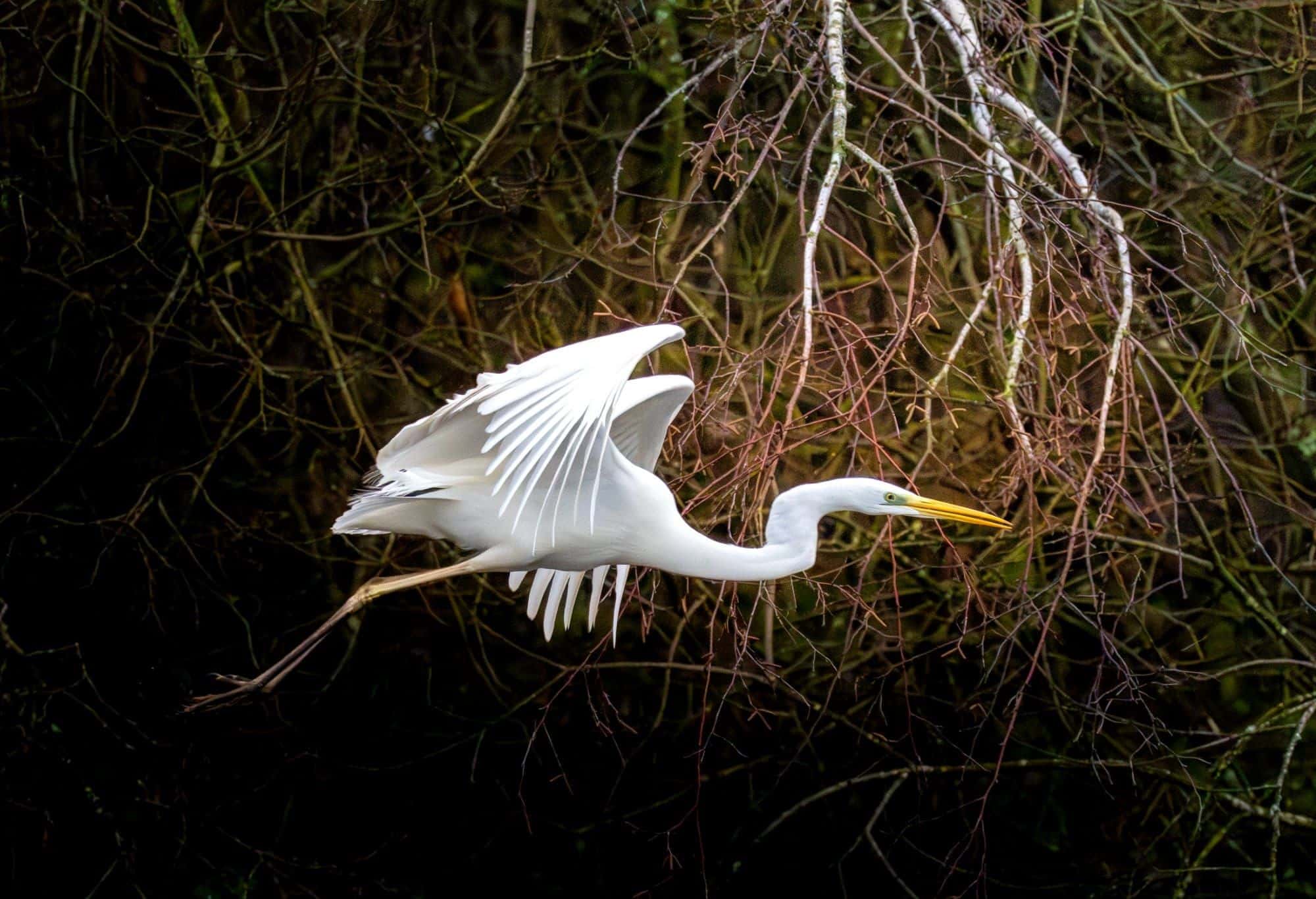
Pennington Flash Country Park
A former mining subsidence that has transformed into one of the North West's premier birdwatching sites. The flash and surrounding habitats attract a wide variety of wildfowl, waders, and woodland birds throughout the year.
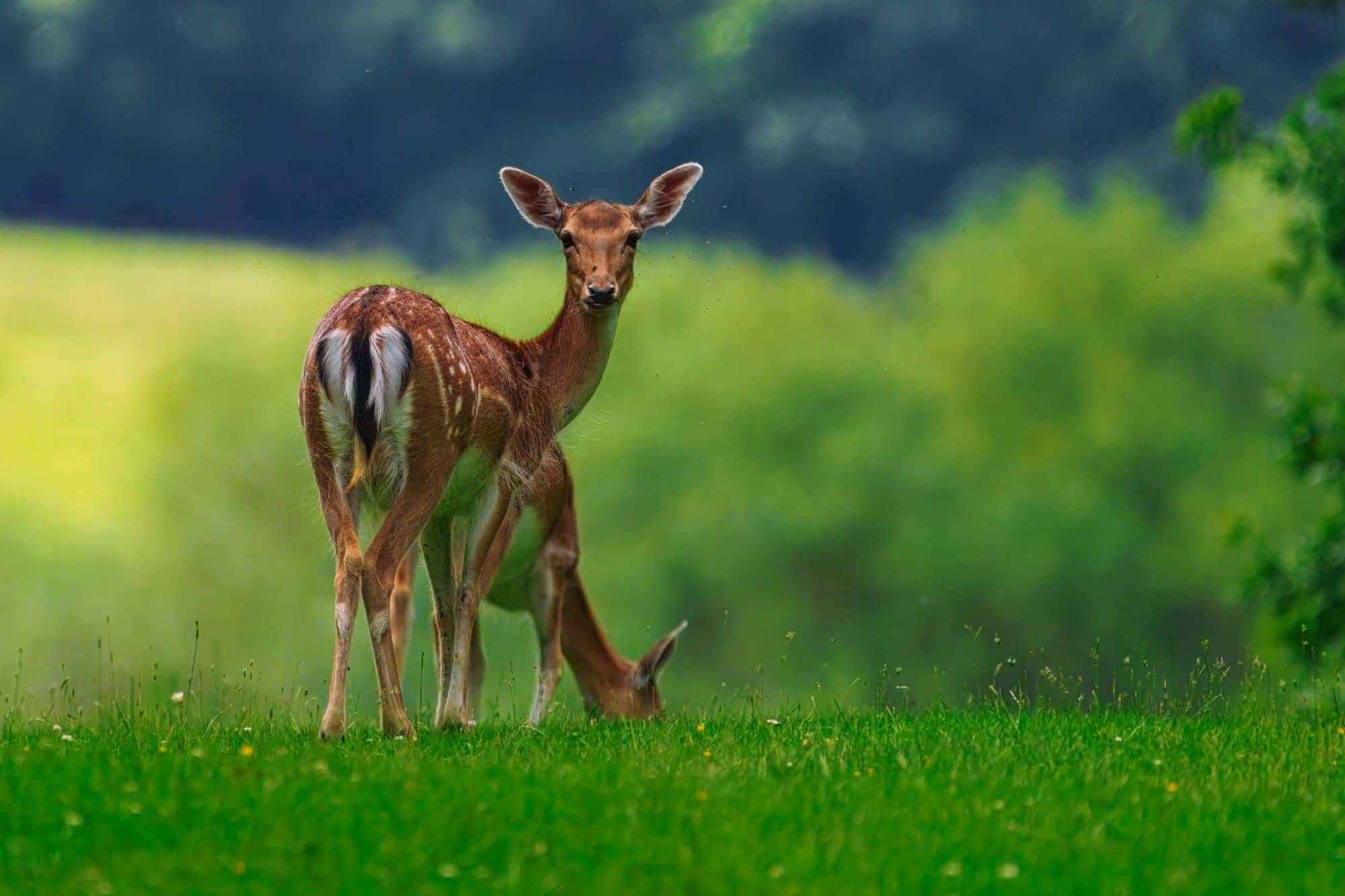
Dunham Massey
A National Trust estate with ancient parkland home to a large herd of fallow deer. The deer park, gardens, and surrounding woodland provide excellent opportunities for wildlife photography in a stunning historic setting.
Specifications
Sample Images
More Wildlife Photography Equipment Reviews
Comparing options? Read my other field reviews: Sony A1 wildlife review, Sony A7R V wildlife review, Sony A6700 wildlife review, OM System OM-1 Mark II wildlife review, Sony FE 200-600mm f/5.6-6.3 G OSS wildlife review, OM System M.Zuiko 300mm f/4 IS Pro wildlife review and OM System M.Zuiko 50-200mm f/2.8 IS Pro wildlife review.
Sony A1
The best camera I've ever owned. The Sony A1's bird eye detection autofocus is in a class of its own for wildlife photography, and the 50MP sensor gives you the resolution to crop heavily and still produce stunning prints. Five years on, it still does everything I need.
Sony A7R V
An outstanding portrait, landscape and detail camera that also handles wildlife when speed isn't the priority. The 61MP sensor gives extraordinary cropping reach with the 200-600mm, but the non-stacked sensor and rolling shutter make this a complement to an A1 rather than a replacement.
Sony A6700
The Sony A6700 is a compact APS-C body with the same AI autofocus chip as the A7R V, a 1.5× crop factor that turns the 200-600mm into a 300-900mm equivalent, and exceptional video AF. It is the camera I should have started with — light enough to carry anywhere, capable enough for everything except flagship-class action and harsh-weather work.
OM System OM-1 Mark II
After twelve months of ownership — and several years of OM and Olympus bodies before it — the OM-1 Mark II is the camera I'd keep if I could only keep one camera system. Lighter than my Sony kit, completely weather sealed, and with autofocus on par with the A1, it covers wildlife stills, wildlife video, landscape and street photography in one body.
Sony FE 200-600mm f/5.6-6.3 G OSS
Outstanding super-telephoto zoom with internal zoom design and excellent sharpness throughout the range. After eighteen months of wildlife shooting on Sony bodies, this is still the lens I'd recommend to anyone — beginner, enthusiast or working pro — buying their first serious wildlife setup.
OM System M.Zuiko 300mm f/4 IS Pro
600mm-equivalent f/4 reach in a sub-1.3kg package. AF that locks on through branches where Sony and Sigma rivals struggle, 1.4m close focus that handles dragonflies and reed buntings on the same trip, and Sync IS for handheld work in any weather.
OM System M.Zuiko 50-200mm f/2.8 IS Pro
A constant-f/2.8, 100-400mm-equivalent wildlife zoom that combines fast bird-in-flight autofocus, internal zoom handling and 0.78m close focus in a 1,075g lens. Expensive, but unusually capable as a single handheld lens for birds, larger wildlife and low-light work.