OM System M.Zuiko 300mm f/4 IS Pro Review
600mm-equivalent f/4 reach in a sub-1.3kg package. AF that locks on through branches where Sony and Sigma rivals struggle, 1.4m close focus that handles dragonflies and reed buntings on the same trip, and Sync IS for handheld work in any weather.
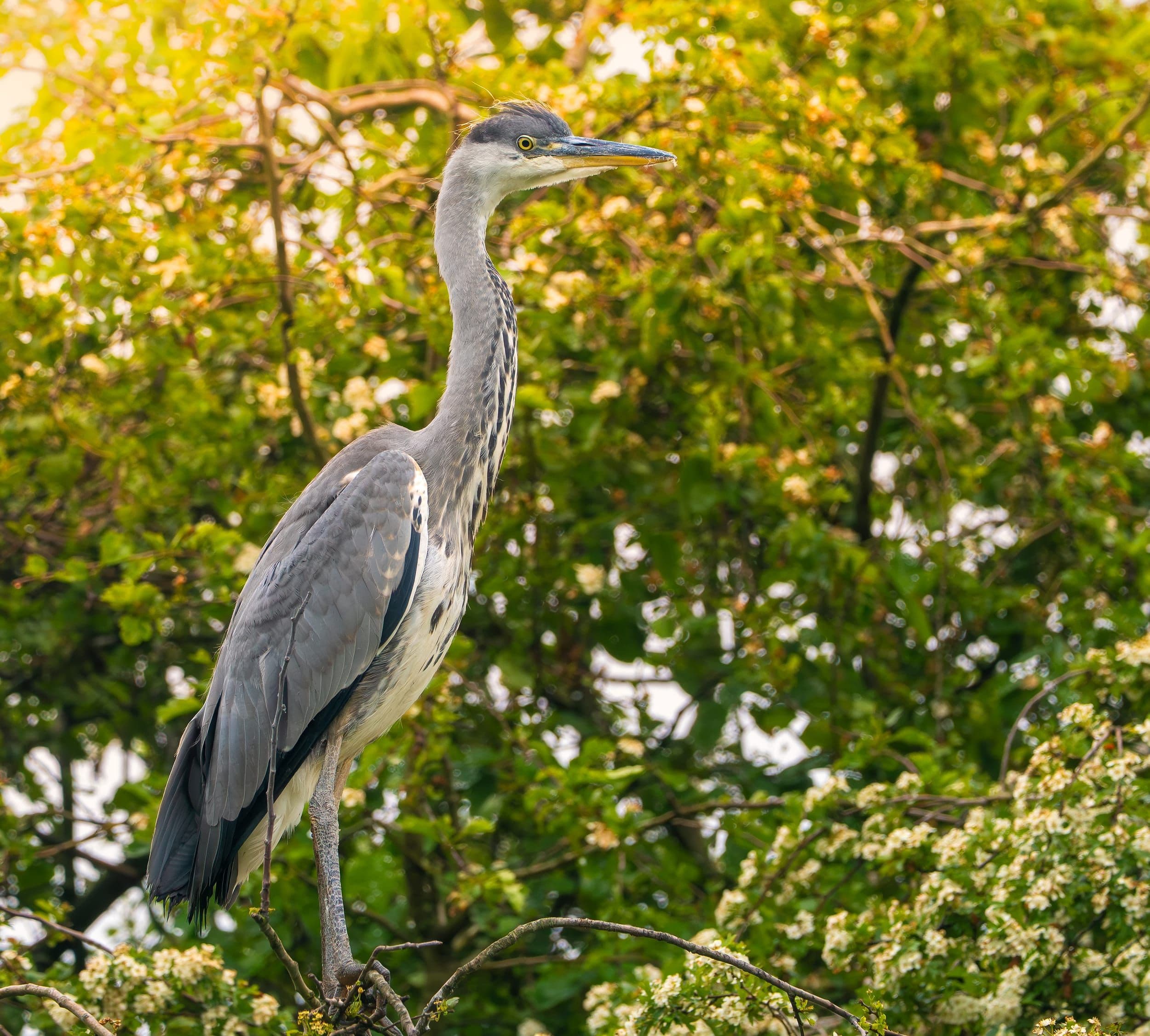
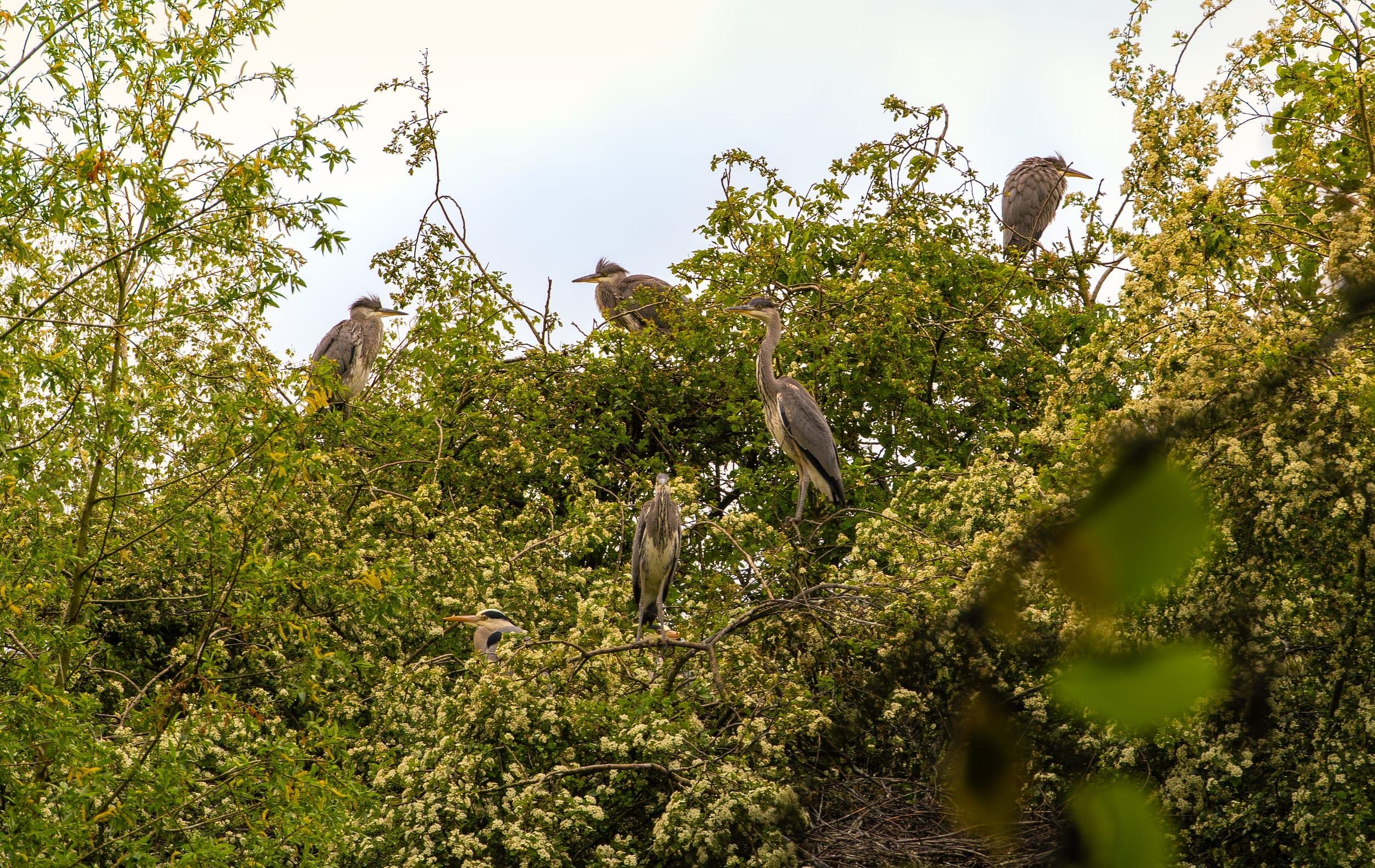
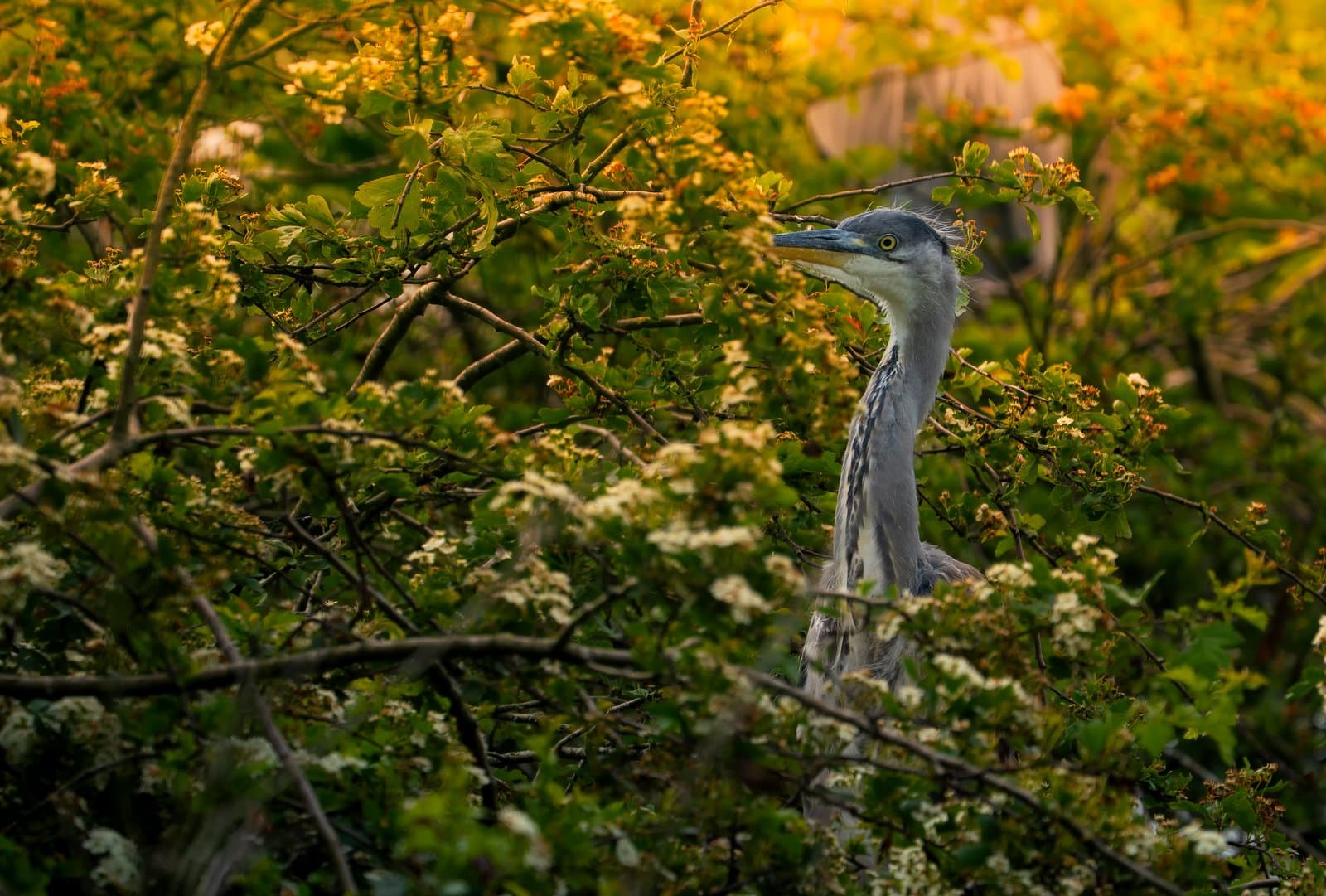
Grey heron in hawthorn blossom — Pennington Flash. OM-1 II + 300mm f/4 IS Pro, handheld, wide open at f/4
I have owned the OM System M.Zuiko 300mm f/4 IS Pro for around eighteen months, and this was the first lens I bought for the OM system. It is the lens I would recommend to anyone who goes out to photograph wildlife — it is sharp, it is one of the best optical lenses I own, and it tracks small and large birds with equal ease.
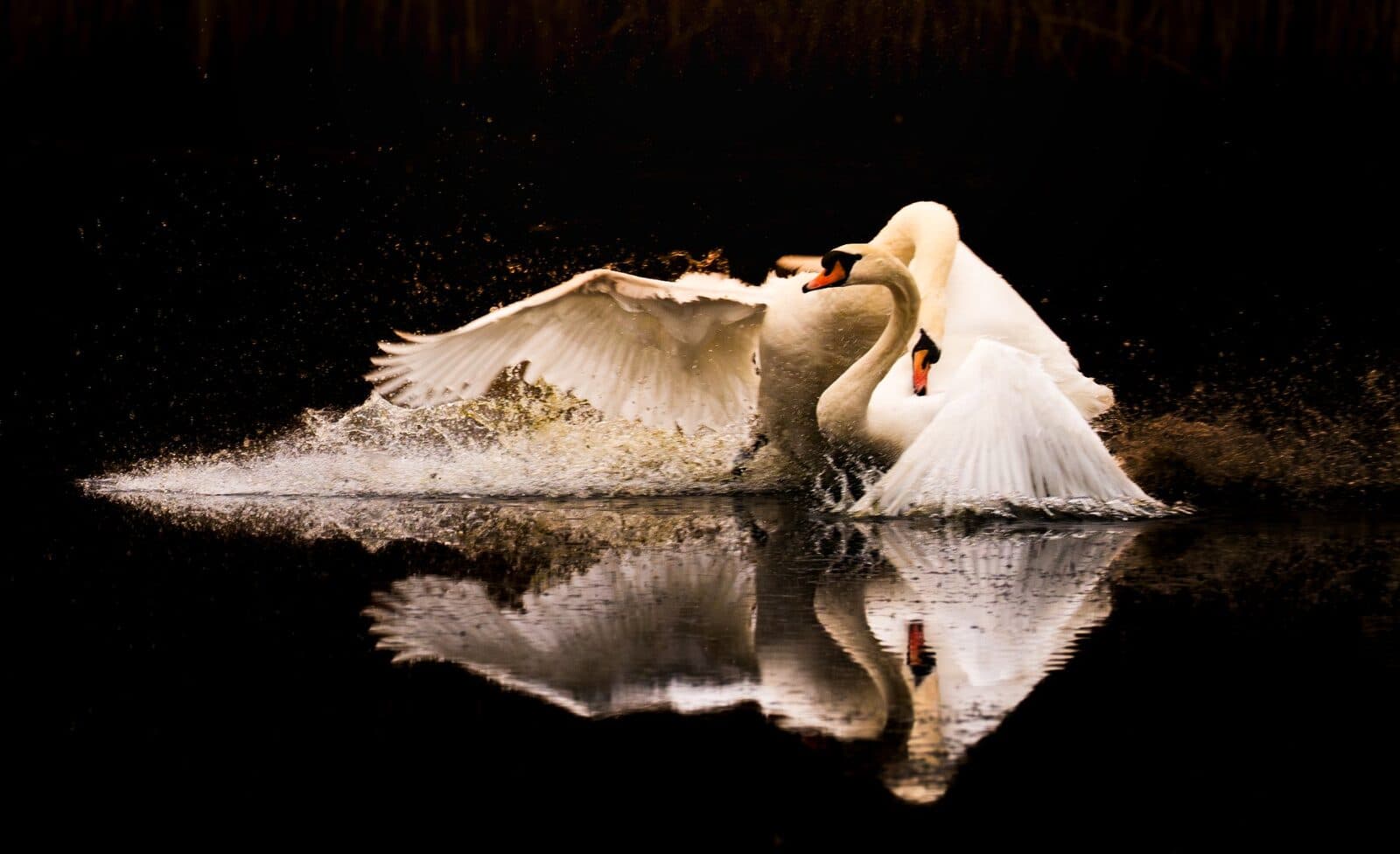
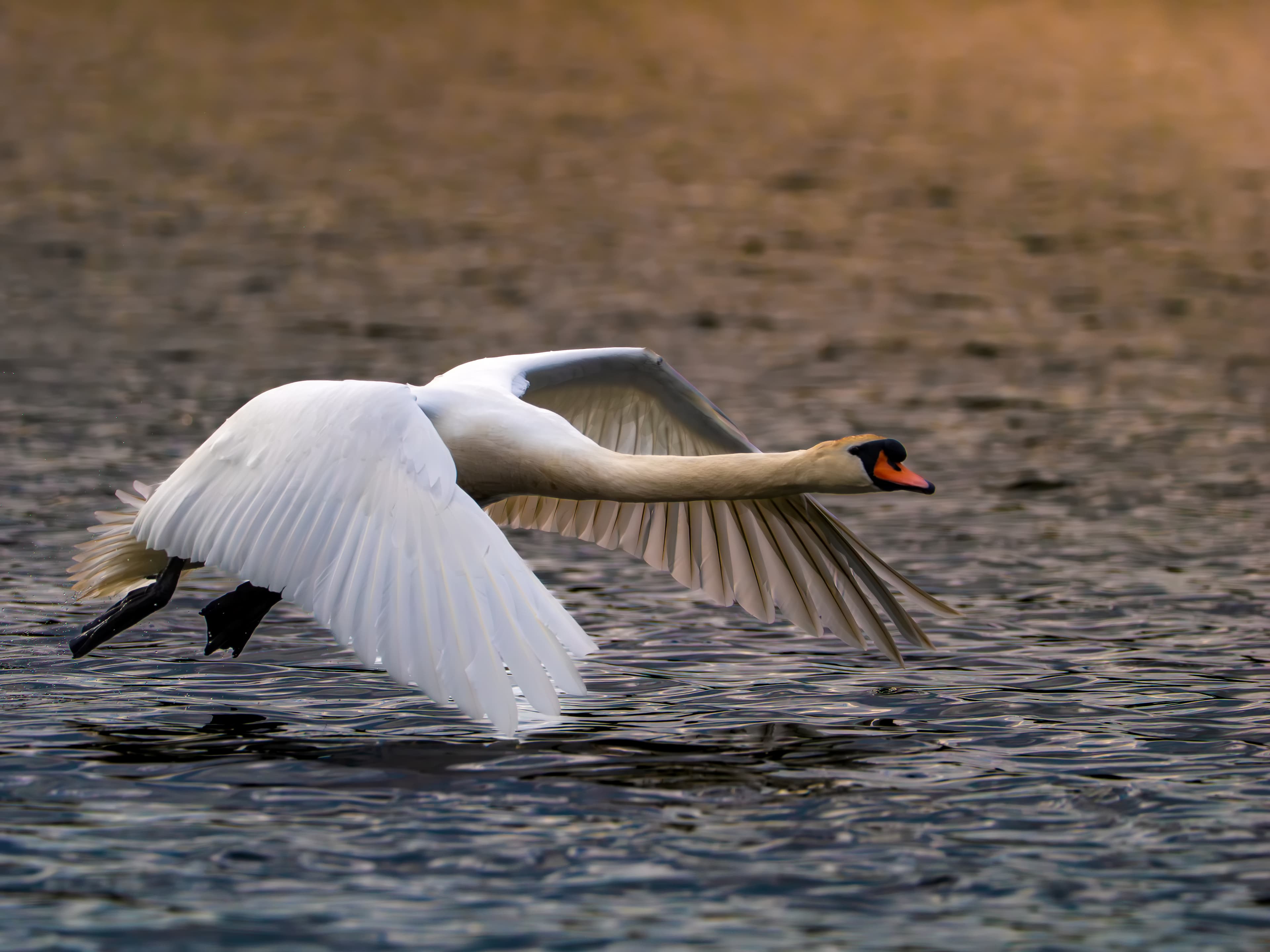
Minimum focus is 1.4m, which makes it a remarkably versatile prime. It is as comfortable taking close-up frames of dragonflies and a robin on a fence as it is tracking swans in burst mode at 60 frames per second without missing focus across the sequence. Compared with my other wildlife lenses, this beats the Sigma 500mm f/5.6 on the Sony for close focus and beats it hands down on hit rate. Against the Sony 200-600mm it is sharper — as you would expect from a prime — and the biggest differences are size and weight.
Why I Chose the 300mm f/4 Pro
The main reason I bought this lens was that I had been researching the best option for fast-moving birds, and the minimum focus distance kept coming up time and time again. I bought it used from MPB for around £1,200 with a twelve-month warranty, and I took out additional insurance to extend that warranty period.
I did compare it against the 100-400mm, which offers zoom flexibility, but the reviews were mixed on optical quality so I decided the 300mm was the better choice. The 150-400mm f/4.5 TC1.25 IS Pro was the other option — considerably more money, and maybe a purchase for the future. I bought the 40-150mm f/2.8 Pro at the same time.
The 600mm-equivalent reach and the reviews that continually praised the lens's quality were what tipped me over. From the first day I used it, this was the right call. It did everything the reviews said it would, and after eighteen months I still take it out every time.
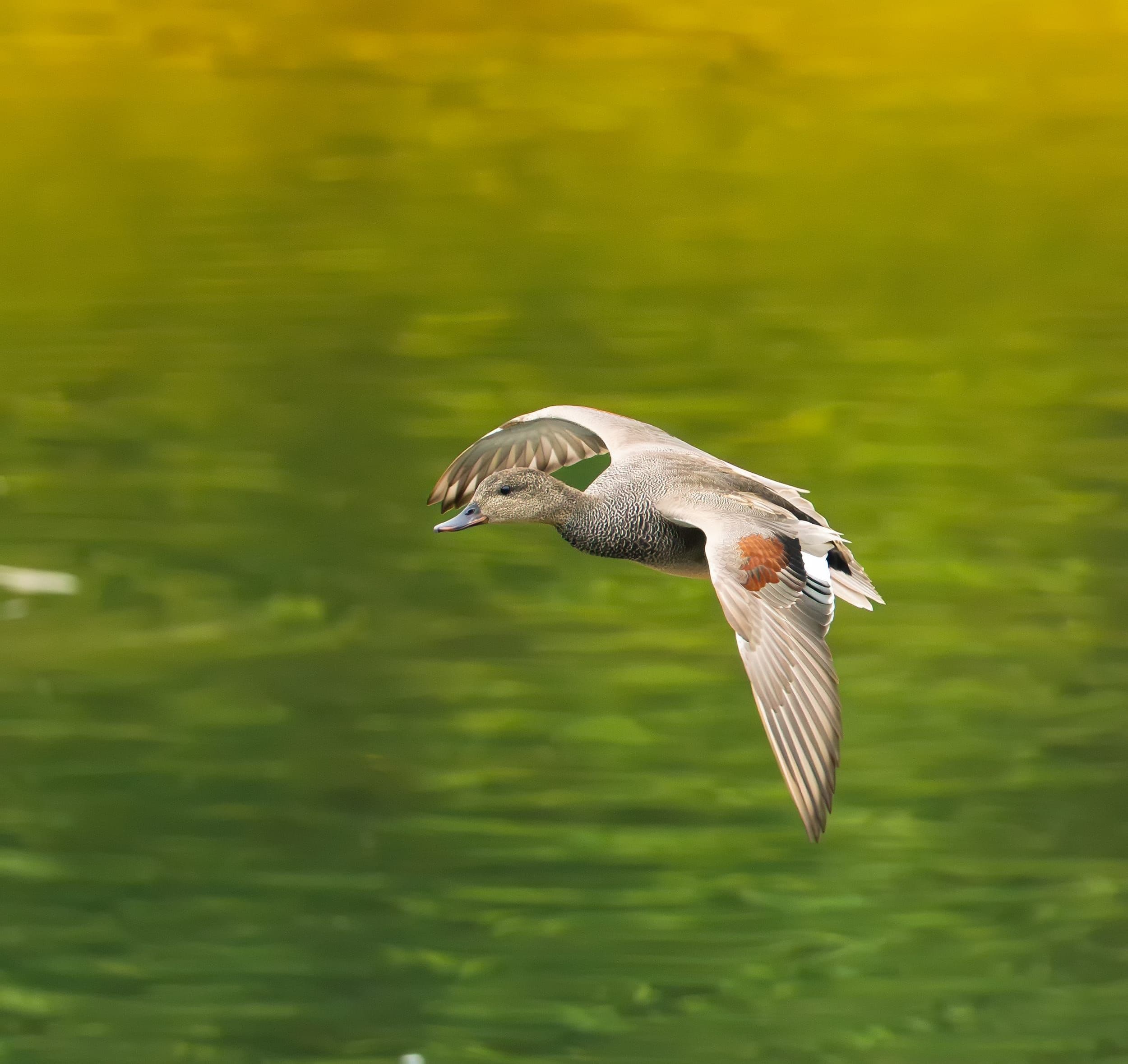
Gadwall wing-flap, frozen at the OM-1 II's full burst rate — the AF and stabilisation combination that makes this lens worth its weight
Build, Handling & Sync IS
I never use a tripod or monopod with this lens. It is small and light enough to carry around all day, and I do not feel the need. Compared with the Sony 200-600mm, I would much rather walk around with the 300mm for half a day; the difference in weight is the difference between coming home tired and coming home wrecked.
The OM-1 II's IBIS combined with the lens's optical IS — the Sync IS system — works brilliantly, particularly when shooting video handheld. The lens and the OM-1 are both fully weather sealed, so I have no issues in any conditions; I do not even bother covering either of them in heavy downpours.
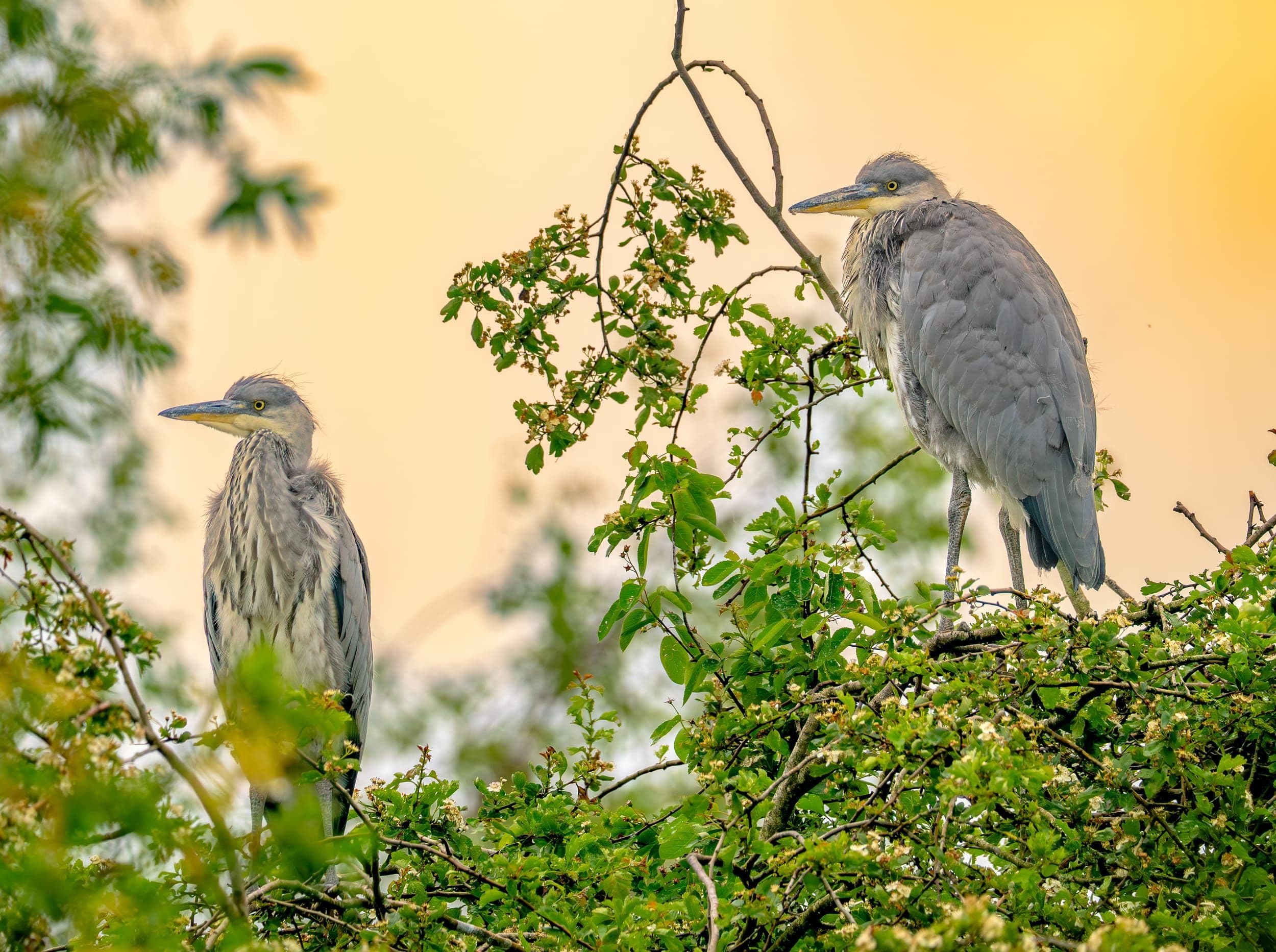
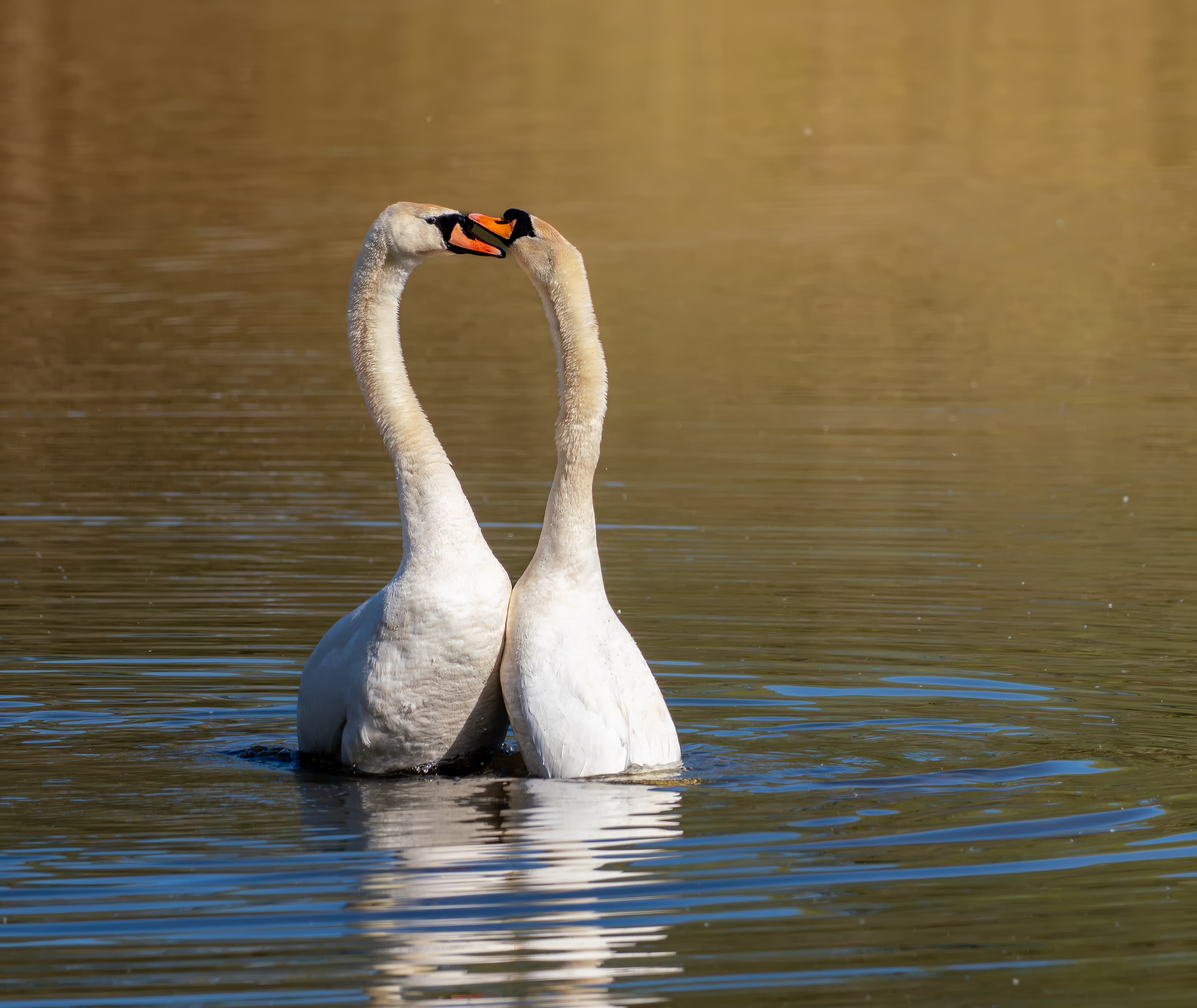
Two herons against a golden-hour sky — the kind of separation and colour you get out of this lens wide open at f/4
Autofocus Performance
The autofocus on this lens is second to none. It can track large and small birds in flight, and it is exceptional at focusing on birds through branches — much better than the Sigma 500mm or the Sony 200-600mm. Once you are locked on, if the focus is slightly out you can make minor adjustments with the focus ring; pulling the ring back or pushing it forward switches between autofocus and manual focus. That is one of the OM system's best features.
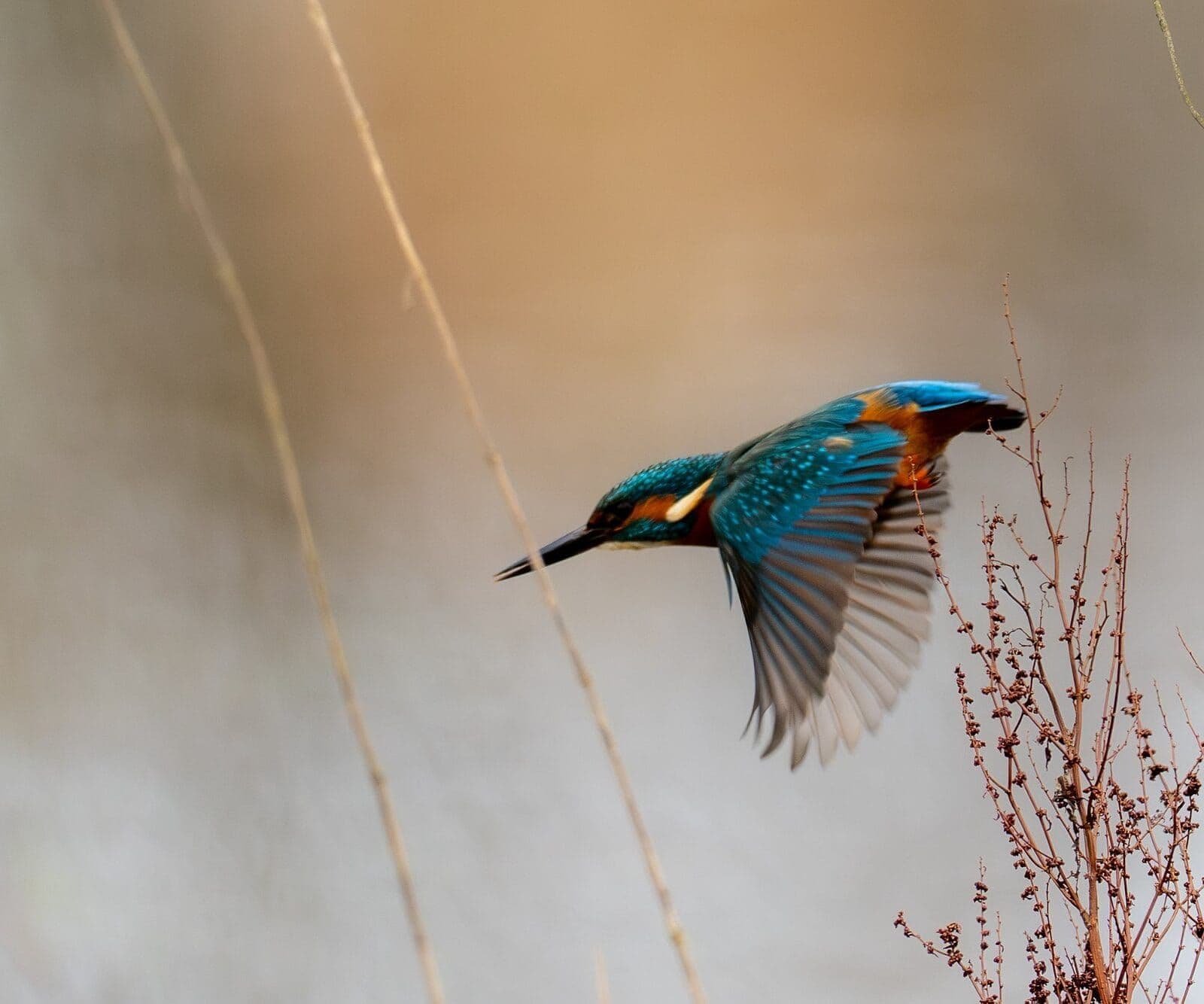
Pro Capture would be handy when a kingfisher turns up, but I have never used it in that situation — the adults do not stay long, and I would rather maximise time and frames than sit with the AF half-pressed waiting for a take-off and risk missing the perched shot entirely. The camera at 60 frames per second in continuous focus mode is more than enough for most situations. Pro Capture earns its keep later in the year, when juveniles leave the nest and there are far more flight opportunities to anticipate.
On autofocus, I have never felt this lens fall short. It just works — that is true of the original OM-1 and the OM-1 II that I use. The 300mm f/4 is exceptional at tracking and locking on to almost any subject; I would say it is better than the Sigma 500mm on the Sony, and comparable to the Sony 200-600mm.
Image Quality & Sharpness
I almost always shoot this lens wide open at f/4. With Micro Four Thirds the sensor is smaller, so keeping the aperture wide helps me hold a faster shutter speed without pushing the ISO. With the MC-14 1.4× teleconverter fitted I do not see any real-world drop in sharpness or image quality. I have the MC-20 2× as well, but I have used it only a handful of times — the distances I am usually shooting at do not call for 1200mm equivalent.
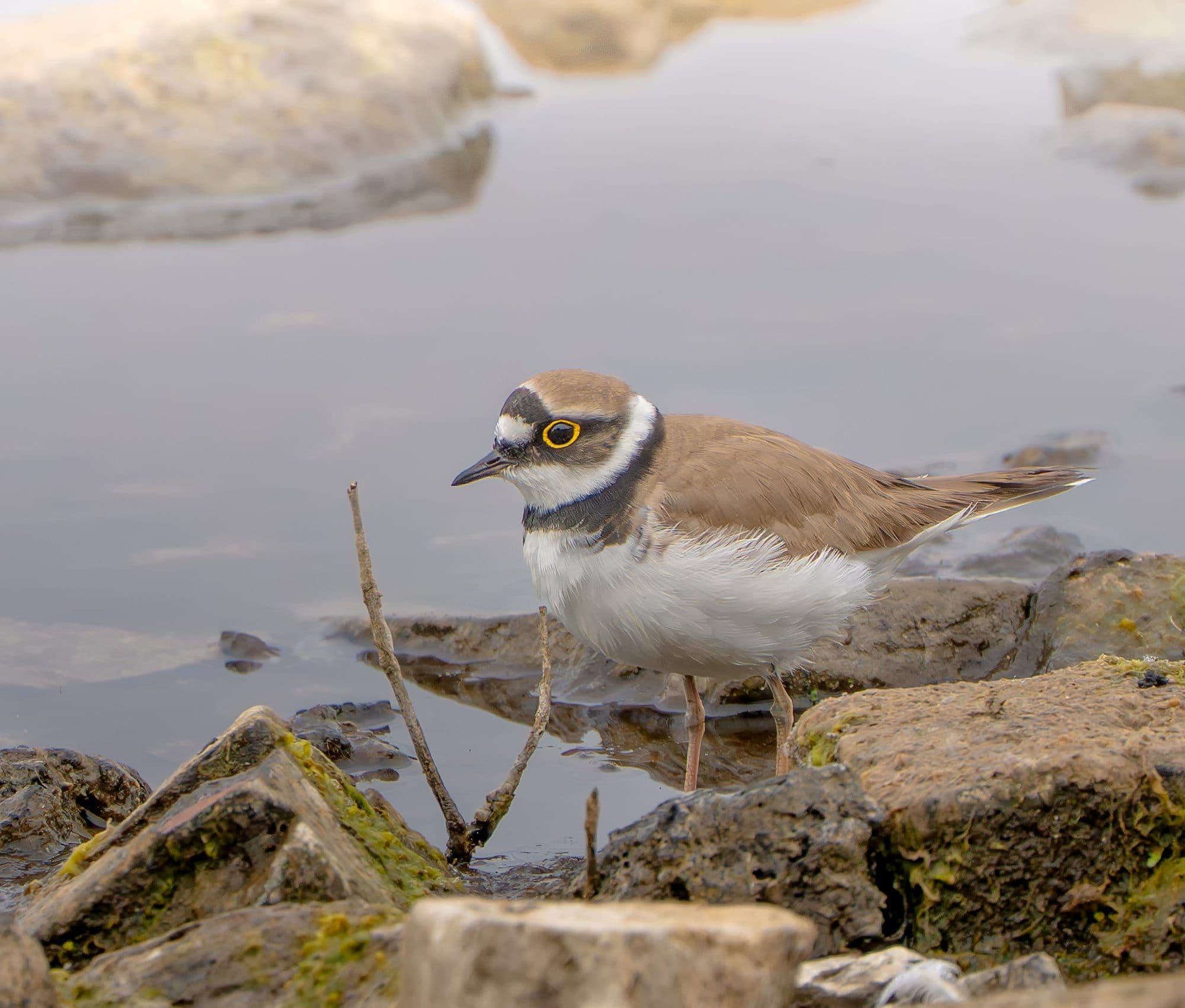
The bokeh and background separation are at their best when I am photographing reed buntings on top of the reeds — the bird and the very tip of the reed in sharp focus, the rest of the reed bed melting away into a creamy backdrop. Colour straight out of the camera never seems quite as good as it does on the Sony, but I shoot RAW only, so that is easily handled in post.
Close Focus — The Versatility Argument
The lens is excellent for frame-filling subjects, but if you get too close the dragonflies will move away. This is where the 300mm f/4 comes into its own — enough working distance to keep them on the perch, enough reach to fill the frame at 600mm equivalent, and Sync IS to hold it all steady handheld. The camera and lens were made for this situation, and the lightning speed of the OM-1 II finishes the job. This lens really can do it all.
I rarely take the 40-150mm f/2.8 out any more. The 60mm and 90mm macros have a more specific job; the 8-25mm I keep for landscape and video. In the Bunting Hide at Pennington Flash the 300mm works whether you want a frame-filling robin or reed bunting at close range, or the same bird at the farthest perch — it is always the lens in use in there.
With the 1.4× Teleconverter
I use the MC-14 1.4× teleconverter often, especially if I am only going out with one camera. It works well for capturing swans in flight over the water, and it still lets me capture images at close range — although it has to come off in the Bunting Hide at Pennington Flash, where the working distance is too tight.
There are no issues with autofocus when the 1.4× is fitted. It still locks on to subjects in flight; I have not noticed any slowing of the AF with it on. If I fit the teleconverter I normally leave it on for the day. I decide before I leave the house whether the TC is going on; I generally do not change lenses when I am out — that is why I normally carry two cameras.
300mm f/4 Pro vs Sony 200-600 vs Sigma 500mm — When to Use Which
At Pennington Flash, I use the 300mm f/4 for small birds, video work, and any time I need to focus through branches. Leighton Moss is trickier — the distances are substantial at points, where the 2× teleconverter might earn its keep, but I have not really tested image quality with it on. If it were the difference between no image and a reasonable image, I would take the reasonable image. More likely I would carry the Sony A1 and the 200-600mm with the 1.4× as well — the A1's 50MP gives more cropping headroom for distant subjects. It is also worth saying that beyond a certain distance, wind and atmospheric conditions start to limit image quality regardless of focal length, so more reach does not always bring the image you are hoping for.
At Martin Mere I would use the 300mm f/4 most often, usually with the 1.4× fitted; it works well around the reed beds for reed buntings on the tops of the reeds. At Dunham Massey I would more than likely use the 300mm without the teleconverter — the deer generally get reasonably close and I want to keep some of the parkland landscape in the background to make the frame feel more natural.
The MFT Sensor — Honest Caveats
Low light can be an issue, but in fairness light is an issue with all photography at the very earliest points of dawn. In those first few minutes I would most likely reach for the Sony, but as the light comes up that window is often only ten minutes or so. The denoise tools in modern editing software have improved no end recently, and I am getting usable images in lower light than would have been possible a year ago. I regularly push the OM-1 II to ISO 6400 — I always say a slightly noisy image with the correct shutter speed beats a low-noise image with a blurry subject.
When I am out with the A1 and the Sigma 500mm f/5.6 alongside the OM-1 II and the 300mm f/4, by the time the keepers are processed in Lightroom and Photoshop and dropped into the same folder, you would be hard pressed to pick out which camera took which images. The only real reason to reach for the Sony over the OM rig is the 50MP file when I need cropping headroom on a distant subject. Background blur on a full-frame body will always be technically better at the same focal length, but I would say the 300mm f/4 still gives a pleasing, non-fussy background — and at 600mm equivalent the long focal length does plenty of the separation work on its own.
In the Field
I have been photographing the herons and their juveniles at Pennington Flash on the nests. It is a tricky situation — the location forces you to focus through branches — and it is exactly where the OM-1 II and the 300mm f/4 earn their keep. I tried to use the Sony A1 and the Sigma 500mm f/5.6 and the AF kept locking on to the branches; the manual focus on the Sigma is not as precise as the OM lens.
The OM-1 II and the 300mm f/4 nailed every shot, locking on to the eye in most situations, with any minor adjustments handled by a small turn of the focus ring — or, when I needed to take over completely, by pulling the ring back into manual mode and dialling in the eye precisely. The other manufacturers could learn a lot from the mechanics and the precision of the OM Pro lenses.
Who Is This Lens For?
If you are moving into Micro Four Thirds and the OM system specifically for wildlife, this is the lens I would recommend — skip everything else. Look for a clean used copy with a warranty if you can, the way I did. This is the most-used lens in my kit, and if I could keep only one lens and one body, this would be the setup.
I own other cameras and lenses that cost substantially more, but in the real world — away from charts, graphs and pixel-peep tests — this is an excellent wildlife combination. The other reason to buy into this system is weight and size; not carrying the weight that normally comes with wildlife photography is genuinely compelling. And the third reason is the weather sealing. Nothing else on the market comes close.
The Bottom Line
I love using the OM system for its speed, and the 300mm f/4 gives me the setup I use daily for wildlife photography. The OM kit was the fourth camera system I have bought across the years, and I am about to trim my collection. I own three OM-1 bodies and an OM-D E-M1 III; none of those are on the chopping block, and the 300mm f/4 is going nowhere.
Tested at Pennington Flash, Leighton Moss, Martin Mere, and Dunham Massey.
Pros & Cons
What I Like
What Frustrates Me
Locations Where I Use This
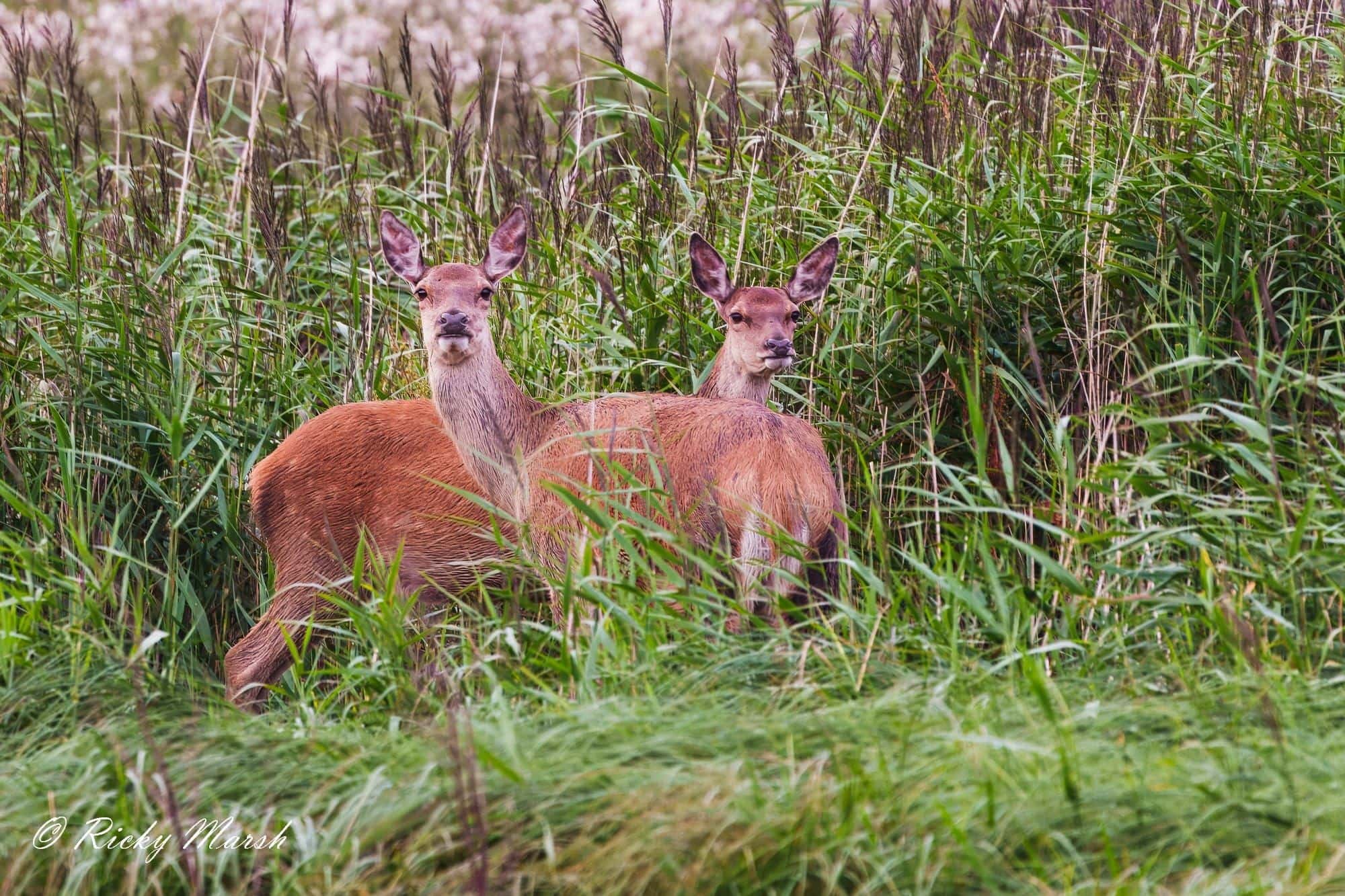
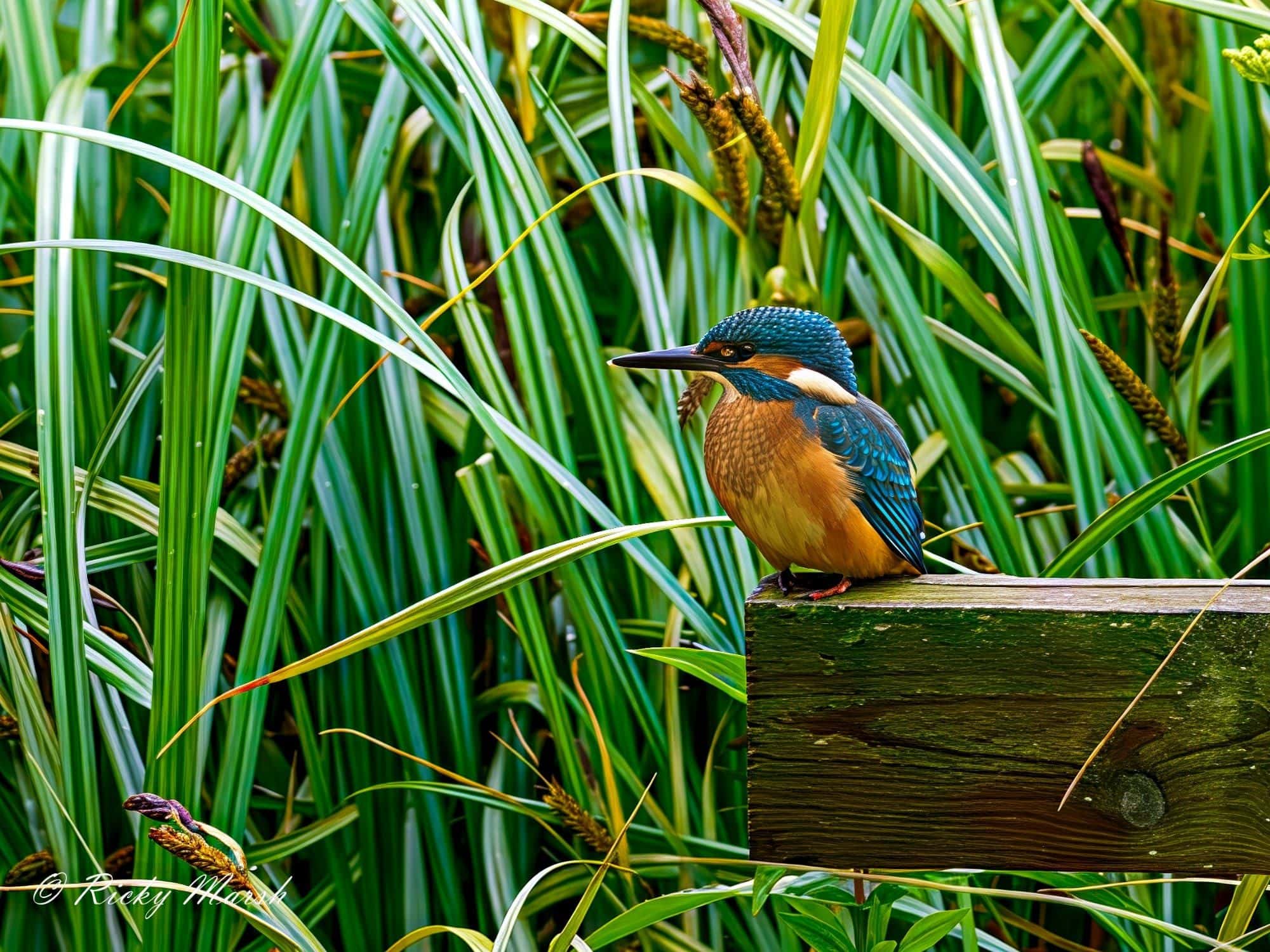
RSPB Leighton Moss
The largest reed bed in North West England, Leighton Moss is a haven for bitterns, marsh harriers, and otters. The reserve offers excellent hides with wheelchair access and stunning views across the reed beds.
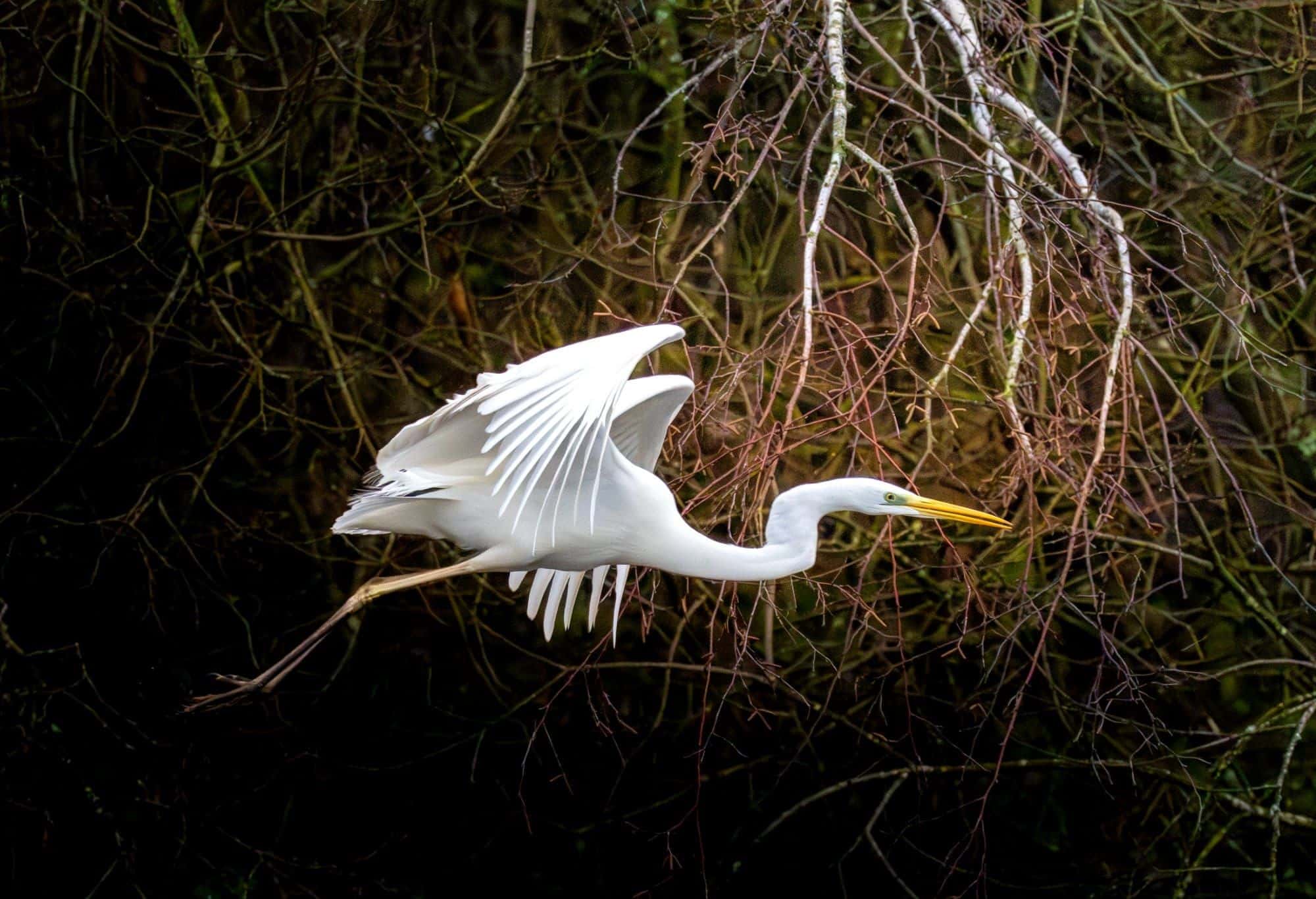
WWT Martin Mere
A wetland paradise that hosts thousands of wintering wildfowl including whooper swans, pink-footed geese, and various duck species. Excellent facilities and hides make this accessible to all.
Pennington Flash Country Park
A former mining subsidence that has transformed into one of the North West's premier birdwatching sites. The flash and surrounding habitats attract a wide variety of wildfowl, waders, and woodland birds throughout the year.
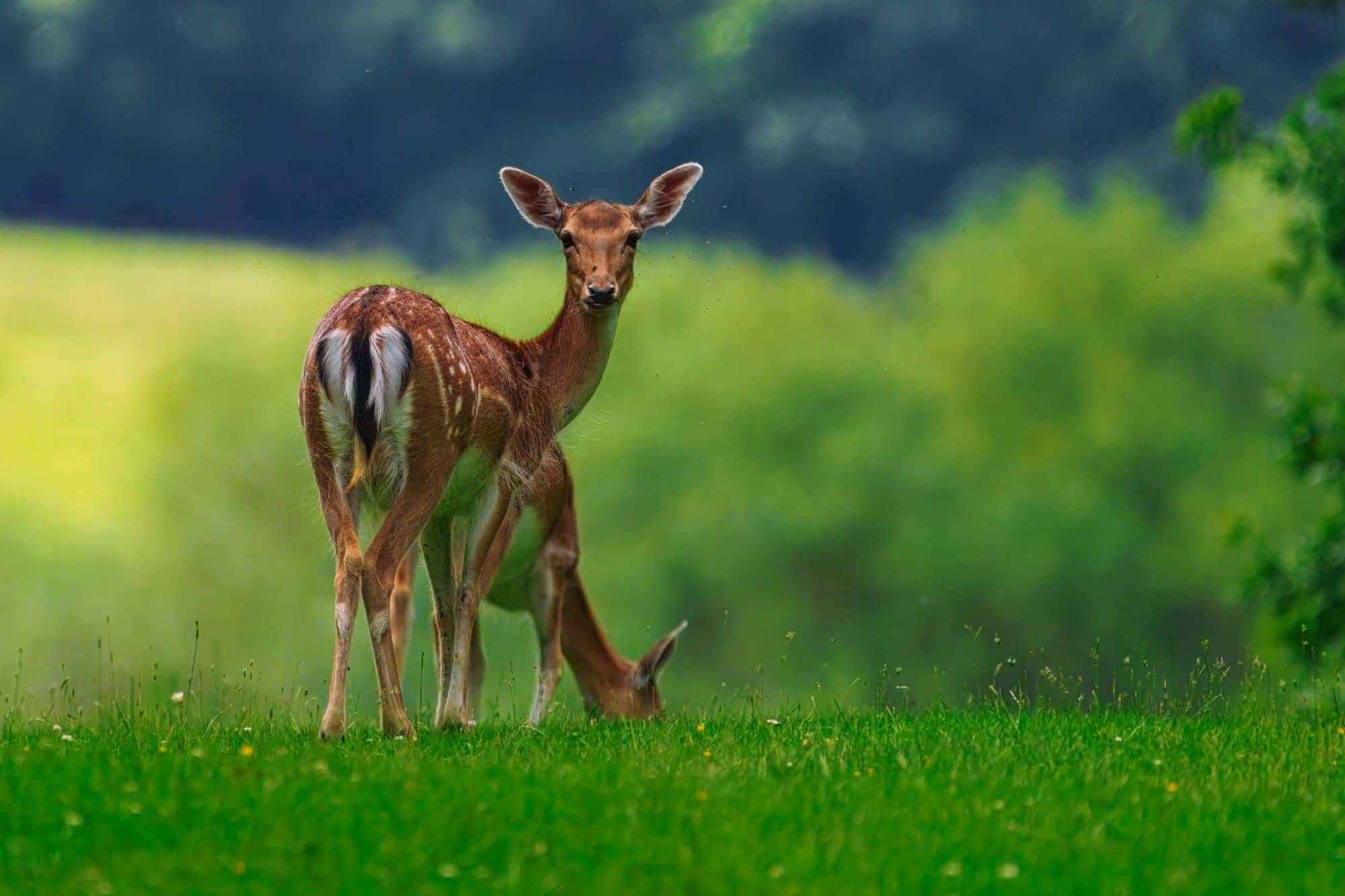
Dunham Massey
A National Trust estate with ancient parkland home to a large herd of fallow deer. The deer park, gardens, and surrounding woodland provide excellent opportunities for wildlife photography in a stunning historic setting.
Specifications
Sample Images
More Wildlife Photography Equipment Reviews
Comparing options? Read my other field reviews: Sony A1 wildlife review, Sony A7R V wildlife review, Sony A6700 wildlife review, OM System OM-1 Mark II wildlife review, Sony FE 200-600mm f/5.6-6.3 G OSS wildlife review, Sigma 500mm f/5.6 DG DN OS Sports wildlife review and OM System M.Zuiko 50-200mm f/2.8 IS Pro wildlife review.
Sony A1
The best camera I've ever owned. The Sony A1's bird eye detection autofocus is in a class of its own for wildlife photography, and the 50MP sensor gives you the resolution to crop heavily and still produce stunning prints. Five years on, it still does everything I need.
Sony A7R V
An outstanding portrait, landscape and detail camera that also handles wildlife when speed isn't the priority. The 61MP sensor gives extraordinary cropping reach with the 200-600mm, but the non-stacked sensor and rolling shutter make this a complement to an A1 rather than a replacement.
Sony A6700
The Sony A6700 is a compact APS-C body with the same AI autofocus chip as the A7R V, a 1.5× crop factor that turns the 200-600mm into a 300-900mm equivalent, and exceptional video AF. It is the camera I should have started with — light enough to carry anywhere, capable enough for everything except flagship-class action and harsh-weather work.
OM System OM-1 Mark II
After twelve months of ownership — and several years of OM and Olympus bodies before it — the OM-1 Mark II is the camera I'd keep if I could only keep one camera system. Lighter than my Sony kit, completely weather sealed, and with autofocus on par with the A1, it covers wildlife stills, wildlife video, landscape and street photography in one body.
Sony FE 200-600mm f/5.6-6.3 G OSS
Outstanding super-telephoto zoom with internal zoom design and excellent sharpness throughout the range. After eighteen months of wildlife shooting on Sony bodies, this is still the lens I'd recommend to anyone — beginner, enthusiast or working pro — buying their first serious wildlife setup.
Sigma 500mm f/5.6 DG DN OS Sports
A 500mm prime that has largely replaced my Sony 200-600mm thanks to its remarkable portability, but the 3.2m minimum focus distance, lack of teleconverter support on Sony, and 15fps burst cap hold it back from perfection.
OM System M.Zuiko 50-200mm f/2.8 IS Pro
A constant-f/2.8, 100-400mm-equivalent wildlife zoom that combines fast bird-in-flight autofocus, internal zoom handling and 0.78m close focus in a 1,075g lens. Expensive, but unusually capable as a single handheld lens for birds, larger wildlife and low-light work.